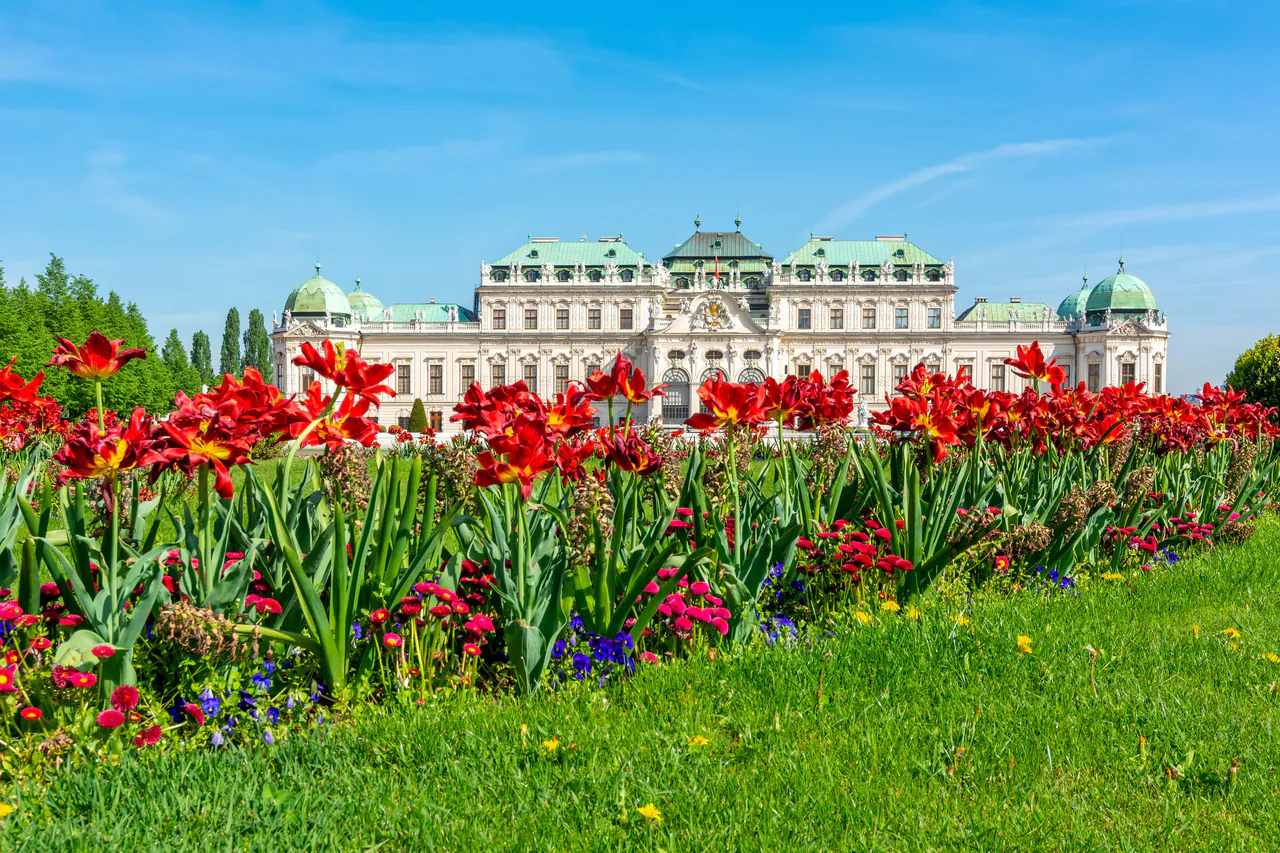
Vienna Architecture & Hundertwasser Guide: From Imperial Elegance to Eco-Rebellion
Written by
Nils Johansson | Founder
Forget the postcard image of Vienna for a second. Beyond the white-frosting facades of the Hofburg Palace and the spiked towers of the Rathaus, this city is a cage match of architectural styles. It's the place where rigid modernism took a stand against imperial kitsch, and where eco-rebel Friedensreich Hundertwasser later declared war on the straight line entirely. You'll spend your morning tracing Otto Wagner’s transition from gold-leafed Art Nouveau to cold functionalism, then grab a stiff drink in an Adolf Loos bar that feels like a mahogany jewelry box. By afternoon, you'll be wandering through a psychedelic, tree-covered dreamscape. This isn't just a sightseeing list. It's a field guide to the city’s defiance. Use the WienMobil app to navigate the transit web, find the best cake in a converted furniture factory, and see the capital through a lens that isn't just Mozart and marble.
Photos
The Dawn of Modernism: Otto Wagner & Adolf Loos
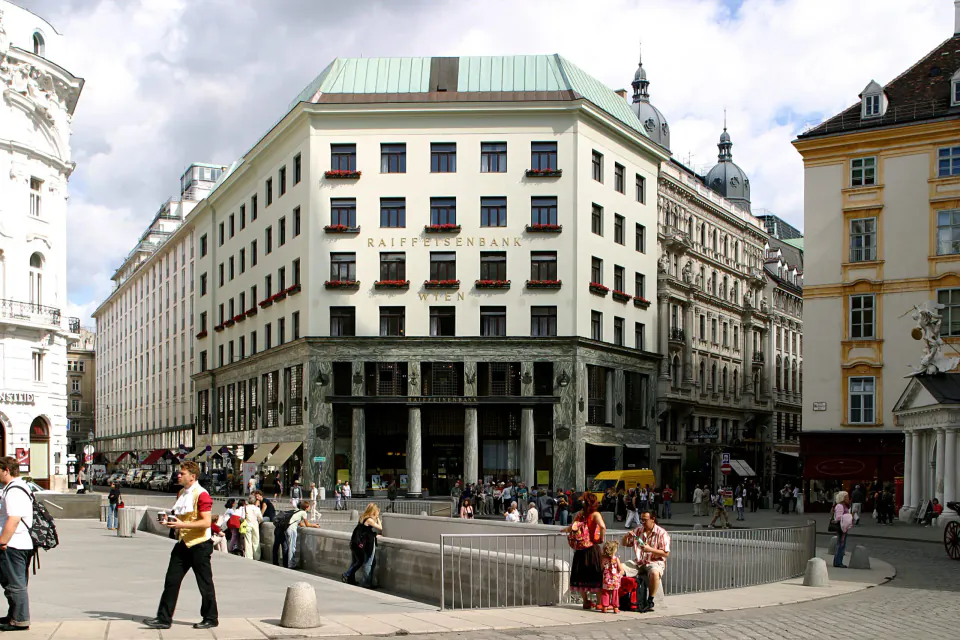
Imperial Baroque feels like the only law in central Vienna until you spot the rebellion in the details. At the turn of the 20th century, Otto Wagner ditched tradition to drag the city into the modern age. Walk down Linke Wienzeile to find his Majolikahaus (1898). Its floral tile facade is a stunner that bridges the gap between Art Nouveau and pure function. But for the real shock, compare Wagner’s flowers to the cold stare of Adolf Loos. Head to Michaelerplatz to see the Looshaus, sitting right across from the flashy Hofburg Palace. When it opened in 1910, its bare windows caused a scandal. Locals called it the "house without eyebrows." Emperor Franz Joseph hated it so much he kept his palace curtains shut to block the view. To feel the genius of Loos yourself, duck into the Loos American Bar at Kärntner Durchgang. It is tiny at 27 square meters. But the mirrors and onyx create a massive, deep space. Grab a cocktail here for €14 to €20. It's a required rite of passage. Don't skip Wagner’s Postsparkasse (Austrian Postal Savings Bank) built in 1906. It used reinforced concrete and aluminum when those were considered industrial junk, not art. The banking hall is a temple of practicality. These men killed the 19th-century frills and paved the way for the radical housing projects of Red Vienna.
Enter the Eco-Rebel: The Vision of Friedensreich Hundertwasser
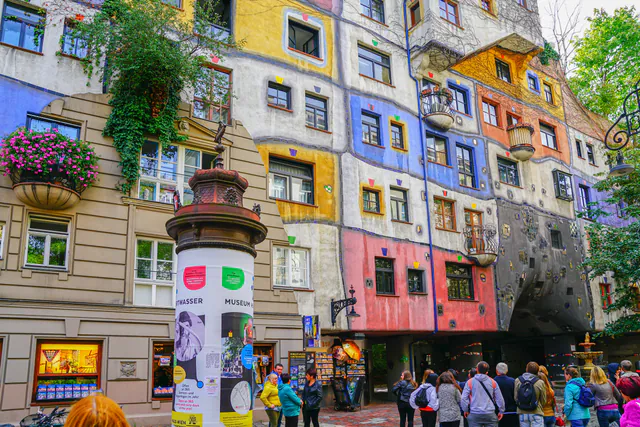
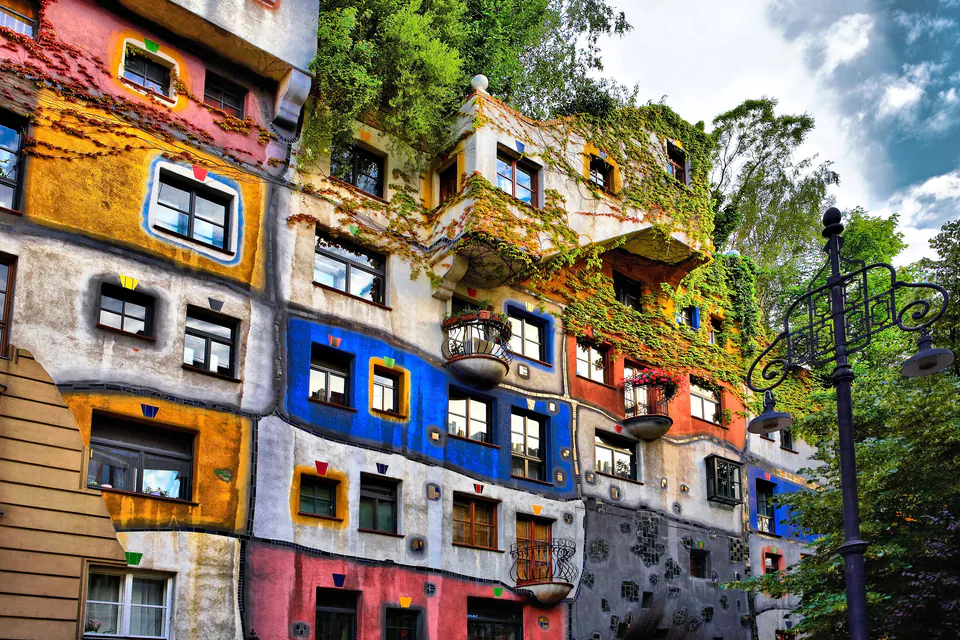
If Loos stripped the city bare, Friedensreich Hundertwasser brought the riot. In the 1980s, this artist attacked the "godless straight line" and demanded spaces where humans and trees lived as equals. His most famous strike is the Hundertwasserhaus at Kegelgasse 36-38 in the 3rd district. It's a municipal housing project that looks like a melted puzzle of primary colors and rooftop forests. You'll see trees growing out of windows. These are "tree tenants" asserting their rights. But don't try to go inside. People actually live here and they value their privacy. Stick to the pedestrian street to see the undulating cobblestones and the fountain. Right across the way is the Hundertwasser Village. It was a tire shop until 1990 when the artist turned it into a bazaar. It leans toward the tourist trap side with its magnet stalls. Still, duck in for five minutes. The design of the cafe and the psychedelic restrooms are pure fairytale. Go in the morning. That's when the light hits the colors best before the crowds arrive.
Art and Ecology: Inside the Kunst Haus Wien
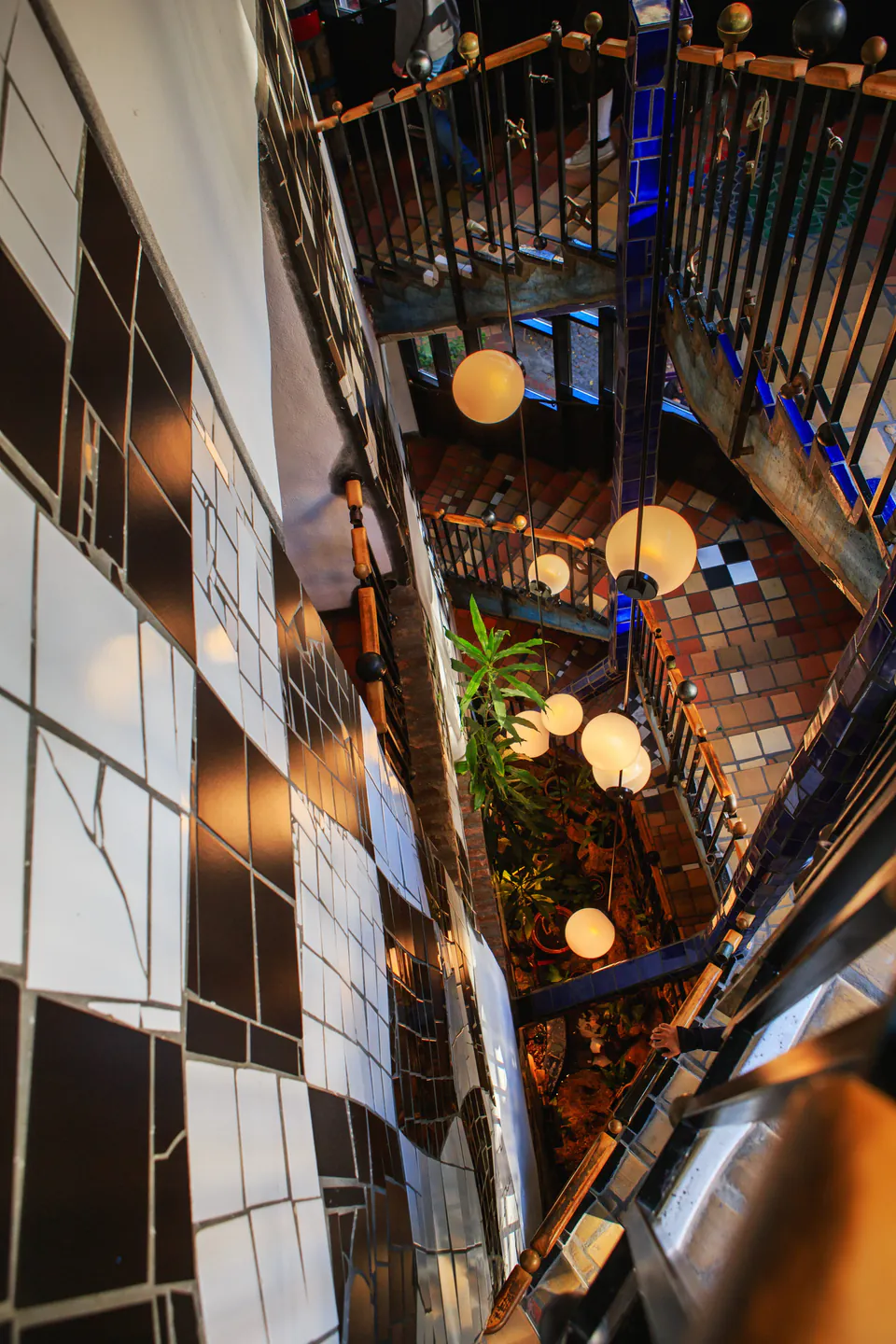
Walk ten minutes from the housing project to Untere Weißgerberstraße to find the Kunst Haus Wien. This is the main event. In 1991, Hundertwasser turned an old Thonet furniture factory into a mosaic-covered museum. The black-and-white checkerboard facade is wrapped in ivy and irregular splashes of paint. It holds the biggest collection of his paintings and models on earth. Entry is €16, but a Vienna City Card gets you 30% off. The floors inside are the big draw. They are uneven and lumpy like a forest floor. It's a deliberate move to make you slow down and find your balance. The building just had a massive upgrade to run on hydrothermal energy. It is officially the first "Green Museum" in Austria. They even have 140,000 bees on the roof making honey for the gift shop. End your visit at Café Friedlich on the ground floor. Reopened in 2024, it's a lush oasis of mosaic pillars. Order the creamy nettle soup (Hundertwassers Leibspeis) and skip the stuffy Ringstrasse cafes for once.
A Beautiful Burn: The Spittelau Incinerator
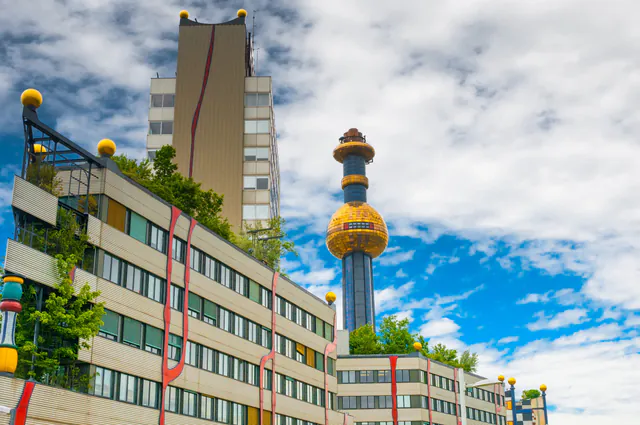
The wildest building in the 9th district is actually a garbage plant. This is the Spittelau Waste Incineration Plant. After a fire in 1987, the city asked Hundertwasser to fix it. He only said yes after they promised to install the world's best smoke-scrubbing tech. Now it heats hundreds of thousands of homes. Take the U4 or U6 metro to Spittelau and you'll see a golden sphere shining on a massive chimney. The whole place looks like Willy Wonka's fortress with blue tiles and jagged windows. It's the only utility building you'll ever see on a postcard. Seeing it from the Danube Canal is great, but getting inside is better. Wien Energie runs free guided tours. You can stand on a glass floor over the waste bunker and see the high-tech guts of the place. You have to book these weeks early on the Wien Energie website. It’s the best proof that sustainable engineering doesn't have to be boring.
Planning Your Architectural Safari: Local Tips
Vienna’s transit is efficient but the rules change. As of 2026, a 24-hour digital ticket on the WienMobil app is €9.70. Paper versions cost more. Skip the U-Bahn when you can and use the trams to see the city pass by. Tram 1 is your best tool. It circles the Ringstrasse for the old-school imperial stuff, then heads into the 3rd district. Get off at Hetzgasse to be two minutes from the Hundertwasserhaus. From there, walk to the Kunst Haus Wien. If you feel active, grab a WienMobil city bike and ride the canal up to Spittelau. If you're hitting several spots, the Vienna City Card is worth the math. It covers all transit and drops the Kunst Haus entry by 30%. It also gives you an excuse to head to the city edges. Go to Steinhof to see Otto Wagner’s golden-domed church. It's the perfect final stop for a modernism tour.
Practical Tips
- 1**Get the WienMobil App:** Don't waste money on paper. Digital 24-hour tickets are €9.70 while paper is €10.20. Buy and activate before you step on the train.
- 2**Ride Tram 1:** This is the best sightseeing deal in town. It loops the Ringstrasse and drops you at Hetzgasse for the Hundertwasserhaus.
- 3**Don't be a nuisance:** The Hundertwasserhaus is full of actual residents. Don't buzz the doors or fly drones. View it from the Kegelgasse sidewalk.
- 4**Snap up Spittelau spots:** The waste incinerator tours are free and fascinating. They fill up fast, so book on the Wien Energie site well before you arrive.
- 5**Flash the City Card:** It pays for itself if you hit the museums. You'll save 30% on the €16 Kunst Haus fee and get unlimited transit.
- 6**Find the Loos Bar:** It's at Kärntner Durchgang 10. Go early because 27 square meters doesn't fit many people. Expect to pay €14 to €20 for a drink.
- 7**Eat at Café Friedlich:** This is the ground-floor gem at Kunst Haus Wien. Try the nettle soup or a Budapest Bagel on the mosaic floors.
- 8**Buy the Roof Honey:** The 140,000 bees on the Kunst Haus roof produce organic honey. Pick up a jar in the gift shop as a real local souvenir.
Top Attractions
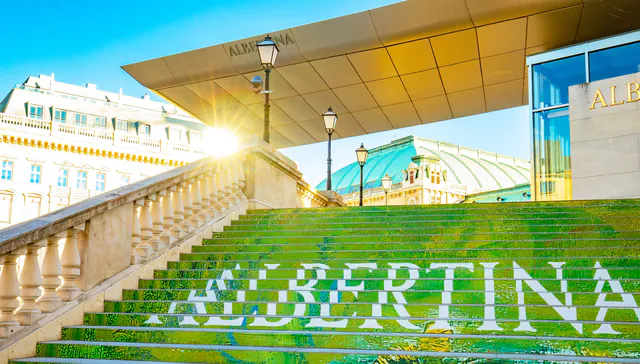
Albertina
Perched on a surviving stretch of Vienna's old city walls, the Albertina is where imperial history and heavy-hitting modern art collide. You'll find it in the I
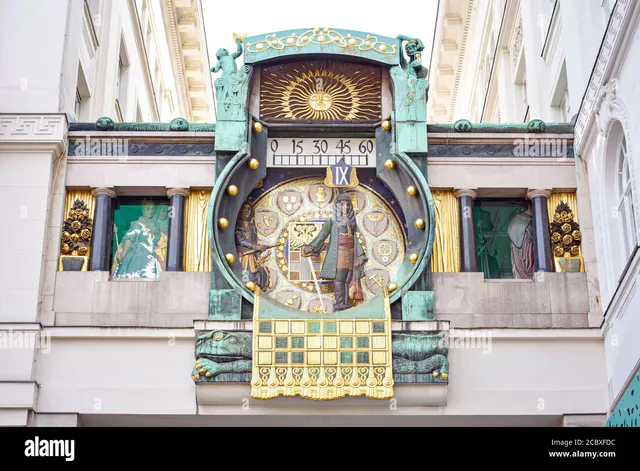
Ankeruhr Clock
Don't just look for a way to tell the time in Vienna’s oldest square. Look up. Spanning an alleyway in the Hoher Markt, the Ankeruhr clock Vienna is a 10-meter-
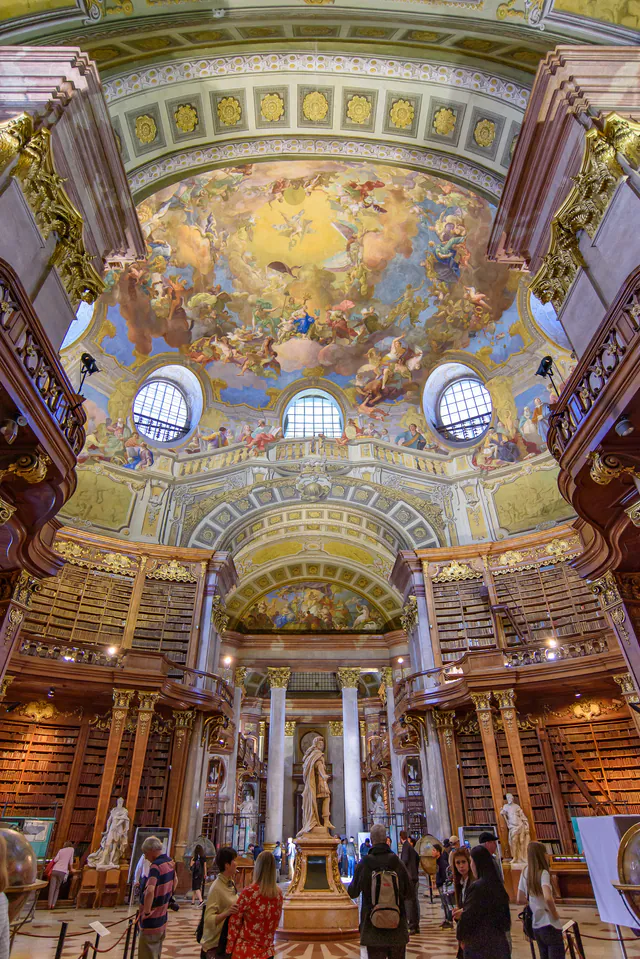
Austrian National Library
Walking into the Austrian National Library vienna feels less like visiting a museum and more like stepping into a Baroque fever dream. It sits right in the Hofb
Frequently Asked Questions
Can you go inside the Hundertwasserhaus in Vienna?
How much does it cost to visit the Kunst Haus Wien?
What is the Spittelau building with the golden dome?
How do I get to the Hundertwasserhaus by public transport?
Who was Friedensreich Hundertwasser?
Where can I see Adolf Loos architecture in Vienna?
Related Guides
- Beyond the Ringstrasse: The Best Day Trips from Vienna
- Vienna's Dark History: A Local's Guide to Macabre Museums & The Imperial Crypt
- Vienna Imperial Palaces Guide: Unveiling the Habsburg Legacy
- The Perfect 24 Hours in Vienna: An Insider's 1-Day Itinerary
- The Ultimate 3-Day Vienna Itinerary: Imperial Grandeur to Hidden Heurigen
- Beyond the Ringstrasse: The Ultimate 5-Day Vienna Itinerary for Deep Explorers
- Vienna Accessible Travel Guide: Navigating the 2025 Access City Award Winner
- Vienna Airport to City Center: The Complete Local's Guide
Concert Venue Finder
From the Musikverein to hidden church concerts. Find your perfect performance.
Try itTags
Places in Vienna
Related attractions, hotels, and more.