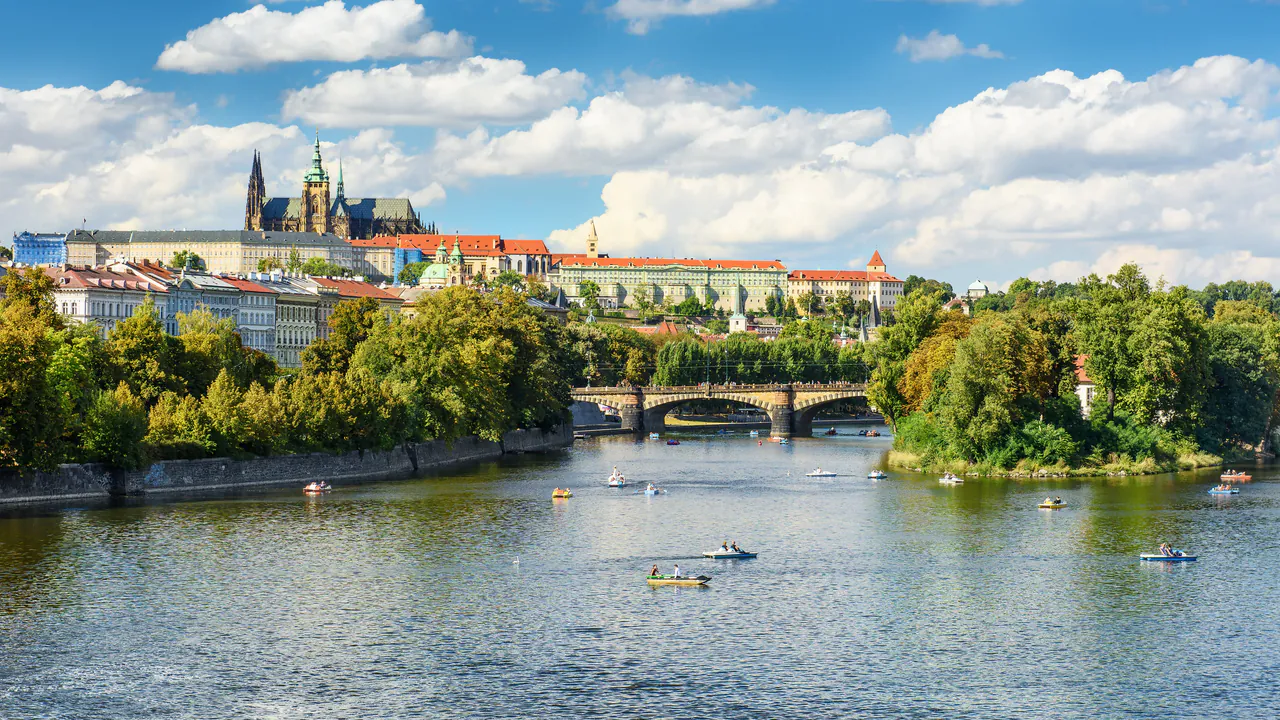
Prague isn't a city with a long Islamic heritage — the Czech Republic is one of the most secular countries in Europe, and the local Muslim community is small (roughly 20,000–25,000 across the country, mostly first- and second-generation residents from the Balkans, Middle East, and North Africa). What that means in practice for a visiting Muslim traveller is straightforward: facilities are limited but they exist, and they're concentrated. There is one purpose-built mosque proper (in Černý Most on the city's eastern edge), one downtown Islamic Center for daily prayers, a small but workable cluster of halal restaurants, and a prayer room at Václav Havel Airport. You will not encounter the kind of cultural-Islam infrastructure you'd find in Sarajevo or Istanbul — no historic minarets, no muezzin call audible from your hotel window — but you will find a polite, low-friction city where being a practising Muslim doesn't draw stares and where the practical needs (prayer space, halal food, qibla-ready hotel rooms on request) are all solvable with a bit of planning. This guide covers the four things you'll actually use: the prayer venues, the halal-food map, the hotel etiquette, and the day-by-day logistics for sightseeing without disrupting your prayer schedule.
Photos
Prayer venues: the Černý Most mosque, the Islamic Center, and the airport prayer room
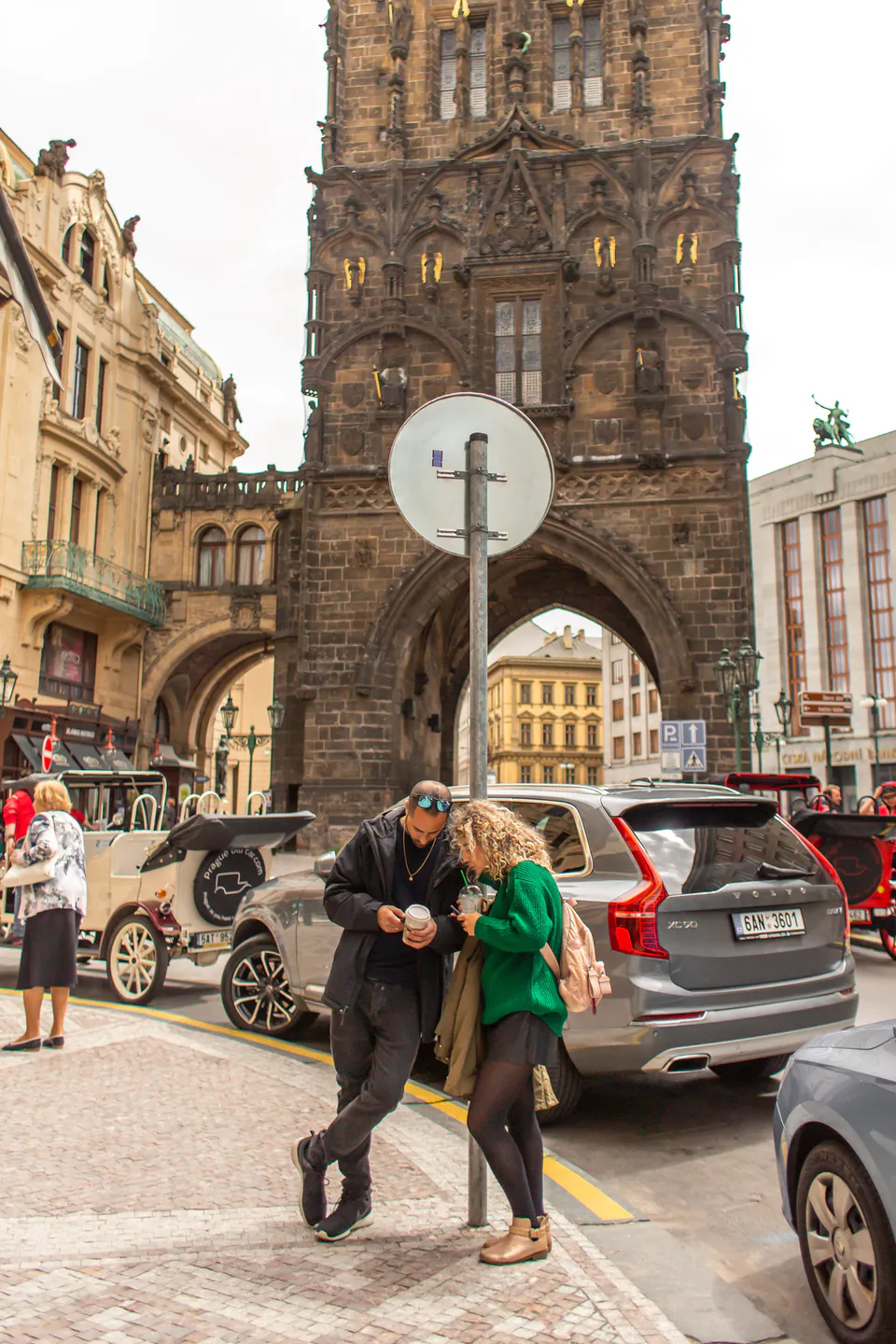
Prague has two main prayer venues. The Prague Mosque (Mešita Praha) on Černokostelecká in Černý Most is the only purpose-built mosque in the city, finished in 1999 — modest brick architecture, no minaret, but it has separate men's and women's prayer halls, full wudu (ablution) facilities, and a community kitchen. Friday Jumu'ah is at roughly 13:00 in summer / 12:30 in winter; arrive 20 minutes early. Getting there: metro line B to Černý Most (eastern terminus, ~20 min from the centre), then a 10-minute walk. The Islamic Center of Prague at Opatovická 18 in Nové Město is the downtown option — a converted ground-floor space, much easier for tourists staying near Wenceslas Square or the Old Town. It hosts daily prayers and Friday Jumu'ah and has a small library and women's prayer area. Hours roughly 11:00–21:00 in winter, 12:00–22:30 in summer. Entry is free; modest dress expected, and women should bring or borrow a headscarf for the prayer hall. The third option that visitors actually use is the multi-faith prayer room at Václav Havel Airport — both terminals have one, signposted, with a small wudu sink. Useful on transit days when you can't get into the city in time.
Halal food: the small but workable Prague map
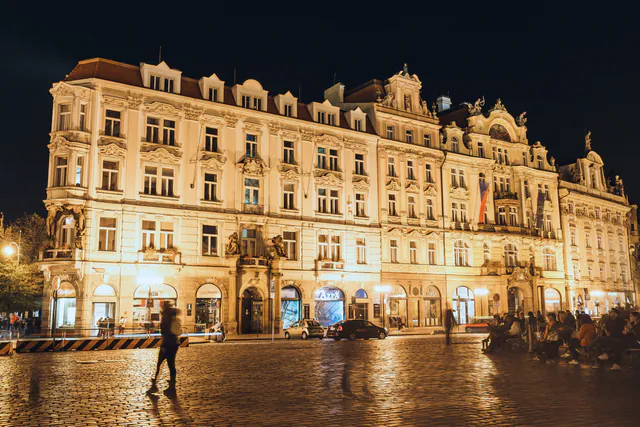
Halal dining in Prague is concentrated rather than abundant. The reliable, dedicated-halal restaurants are clustered in two areas: around Wenceslas Square / Vodičkova for sit-down Middle Eastern food, and around the I. P. Pavlova / Vinohrady area for casual options. Names that consistently maintain halal certification (always confirm at the door — turnover is real): Beirut and Aladin for Lebanese and Syrian mezze, Saryan for Armenian-Lebanese fusion, Habibi for Egyptian, Bejrut for casual shawarma and falafel, and Mezdar in Karlín for upscale Levantine. For Turkish, Kebabhouse Vinohrady and Saray Restaurant near the centre. South Asian halal: Beas Vegetarian Dhaba (Indian veg-only — automatically halal-safe), Indian by Nature in Žižkov, Mughal Express in Smíchov. Halal groceries and butchers: Farah Halal Market on Opatovická (next door to the Islamic Center), and Al Madina on Korunní in Vinohrady. Note that the Czech mainstream restaurant scene is heavy on pork and beer; ordering 'vegetarian' or 'fish' at a non-halal restaurant doesn't avoid the alcohol-in-sauce or shared-grill issues, so for full halal compliance stick to certified places. Many chain restaurants (Burger King, KFC) are NOT halal-certified in Czech Republic — different from UK or France.
Hotels, prayer logistics, and what to ask the front desk
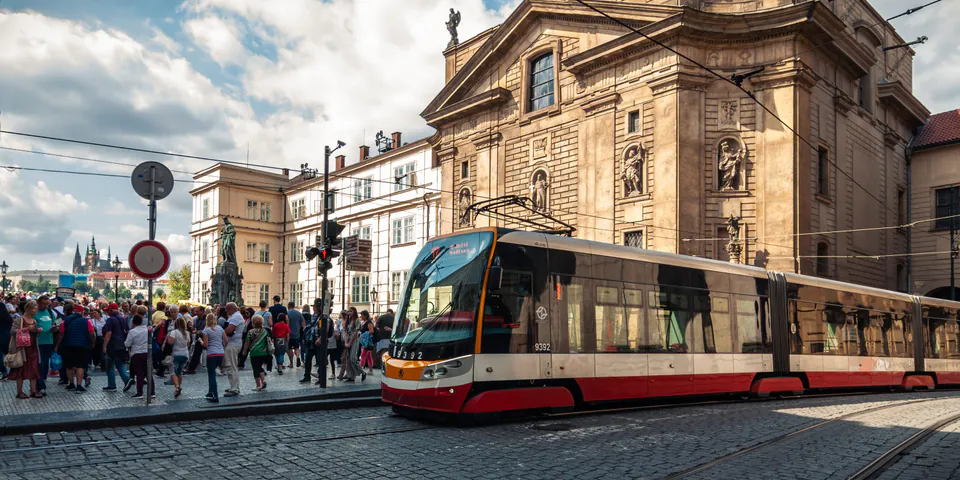
No Prague hotels market themselves as 'Muslim-friendly' the way Dubai or Istanbul properties do, but most international-brand hotels (Hilton, Marriott, InterContinental, Mövenpick) handle reasonable requests cleanly when you mention them at check-in or in your booking notes. Ask for: a room with a clear line to qibla (southeast from Prague — towards the Mecca direction roughly 130° from north), a prayer mat (most hotels can produce one within an hour), no minibar with alcohol if you'd rather not have it in the room, and a quiet room away from the bar/club floor on weekends. For wudu, the hotel bathroom is fine — the floor-mounted bidet or hand shower attachments common in Czech bathrooms make ablutions easy. Prayer-time calculation in Prague is straightforward: in mid-summer Fajr is around 03:00 and Isha after 22:00 (long days, short nights — plan around this if you're sensitive to fast schedules); in winter Fajr ~06:30 and Isha ~17:30. Apps like Muslim Pro, IslamicFinder, or Athan handle Prague accurately; the Hanafi method works fine for Asr.
Daily logistics: sightseeing without breaking the prayer schedule
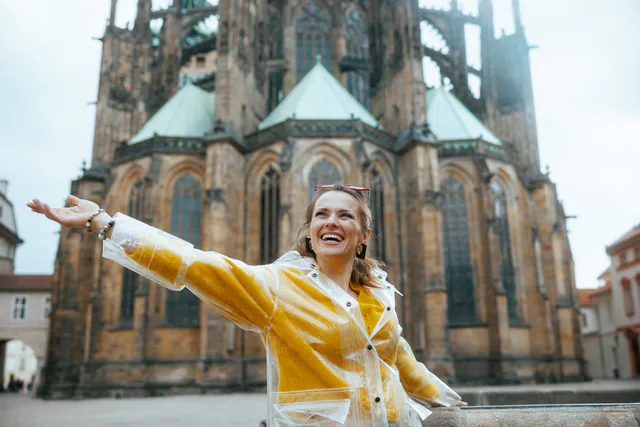
The practical pattern most Muslim visitors settle into for a 3–4 day Prague trip: morning Fajr at the hotel, then sightseeing in the historic core (Old Town, Lesser Town, Charles Bridge, Prague Castle) — all walkable and within 15 minutes of the Islamic Center for Dhuhr. Dhuhr at Opatovická 18 doubles as a quick break with a guaranteed prayer space; the centre is unobtrusive and Czech locals are entirely indifferent to people coming and going. Asr lines up nicely with a late lunch at one of the Wenceslas-area halal spots. Maghrib in winter falls at 16:00–17:00, which is awkward — plan to be near your hotel or duck into a quiet corner of a museum (the Prague National Museum has empty side-rooms; Strahov Monastery library closes at 17:00 but the courtyard is accessible until later). Isha in winter is early enough that you can pray at the hotel before dinner; in summer it's late so you'll typically be back at the hotel anyway. The 24-hour PID transit pass (120 CZK) is your friend — it covers metro, tram, and bus so you can move quickly between sights, prayer, and meals without taxi costs. For Friday, build the day around Jumu'ah at the Islamic Center at 13:00 — arrive at 12:30, prayer takes 30 minutes, you're back to sightseeing by 14:00 with the rest of the afternoon free.
Practical Tips
- 1Stay near Wenceslas Square or the Old Town — both prayer venues, halal restaurants, and the major sights are within 15-minute walks of each other.
- 2Friday Jumu'ah at the Islamic Center on Opatovická is at 13:00 — arrive 30 minutes early to secure a spot in the prayer hall.
- 3The PID Lítačka app + a 24-hour or 72-hour transit pass lets you move between sights, prayer, and meals without taxi costs.
- 4In Prague, the qibla direction is roughly 130° from north (south-southeast); apps like Muslim Pro or Athan handle the calculation automatically.
- 5Summer Fajr in Prague is around 03:00 and Isha after 22:00 — plan your sleep schedule and Ramadan fasts accordingly; winter is much friendlier.
- 6Václav Havel Airport has multi-faith prayer rooms in both terminals — useful for transit days when you can't reach a city venue in time.
Top Attractions
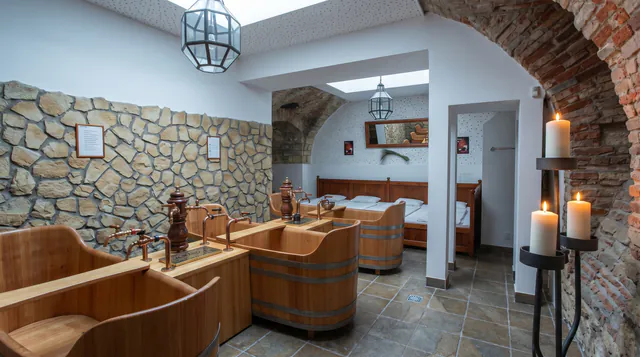
Pivní lázně Bernard
Leave the crowds on the cobblestones above. You are heading into the deep brick cellars of Staré Město. It smells like roasted malt and earthy hops down here. T
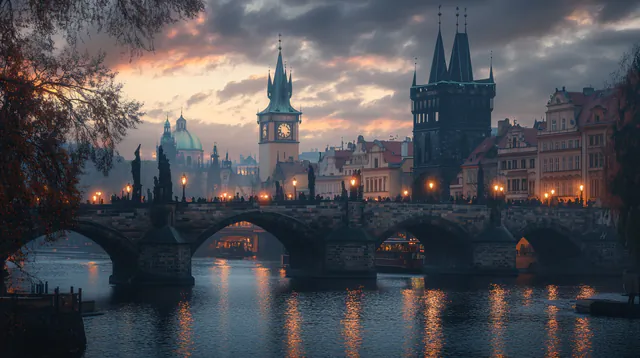
Bohemian Alternative Tours
Fighting the crowds in Prague’s Old Town is a choice. You don’t have to do it. Most people queue for hours at the Astronomical Clock or get lost in the tourist
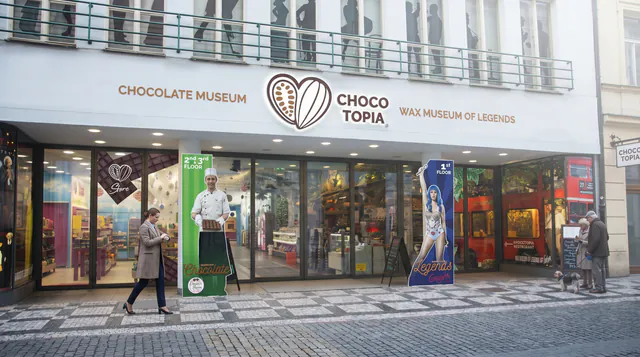
Chocotopia | Čokoládové zážitkové centrum
Don't look for Chocotopia in Prague’s Old Town anymore. The old spots on Celetná are permanently closed. This 4,000-square-meter monster is now located in Průho
Frequently Asked Questions
Is there a real mosque in Prague?
Where is the most convenient prayer venue near the Old Town?
Are there reliable halal restaurants in Prague?
Is the airport useful for prayer if I'm on a tight transit?
What should I ask the hotel front desk for as a Muslim traveller?
Are KFC, Burger King, and similar chains halal in Prague?
Related Guides
- Accessible Travel Guide to Prague: Old Town Hall & Beyond
- Prague Budget Travel & Old Town Hall Expert Guide 2026
- Emergency Contacts & Services in Prague: A Comprehensive Healthcare and Security Guide
- Prague Border Survival Guide: Visas, EES Biometrics, and Entry Requirements for 2026
- The Definitive Guide to Healthcare & Pharmacies in Prague
- Comprehensive Internet and Mobile Connectivity Guide: Prague
- Linguistic Immersion and Heritage at the Old Town Hall
- Luggage Storage Infrastructure and Urban Mobility Logistics in Prague
Trip Budget Calculator
Get a realistic cost estimate for your {city} trip in seconds.
Try itTags
Places in Prague
Related attractions, hotels, and more.