Golden Lane (Zlatá ulička)
Landmark
About the Experience
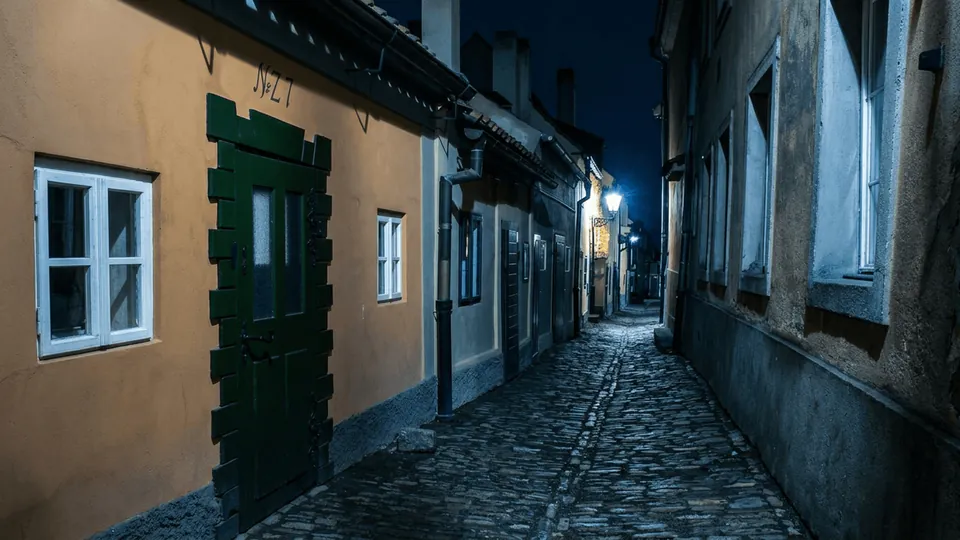
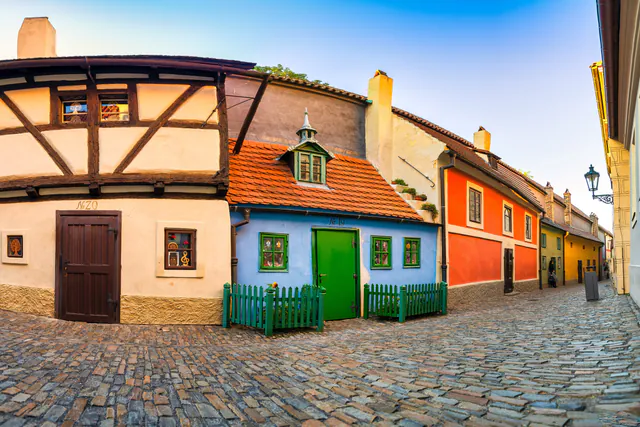
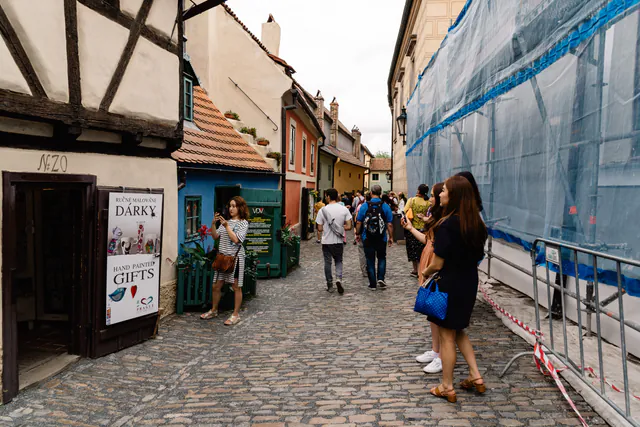
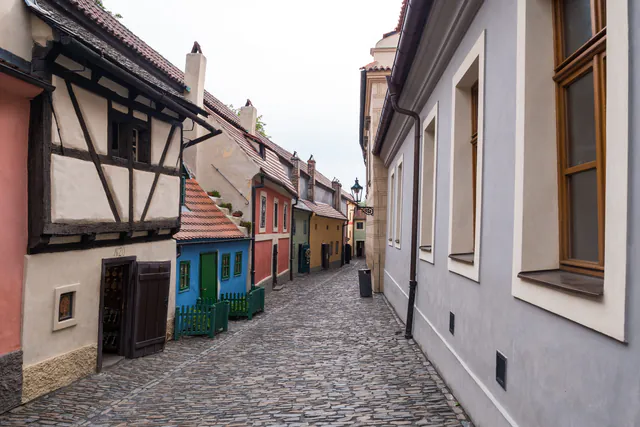
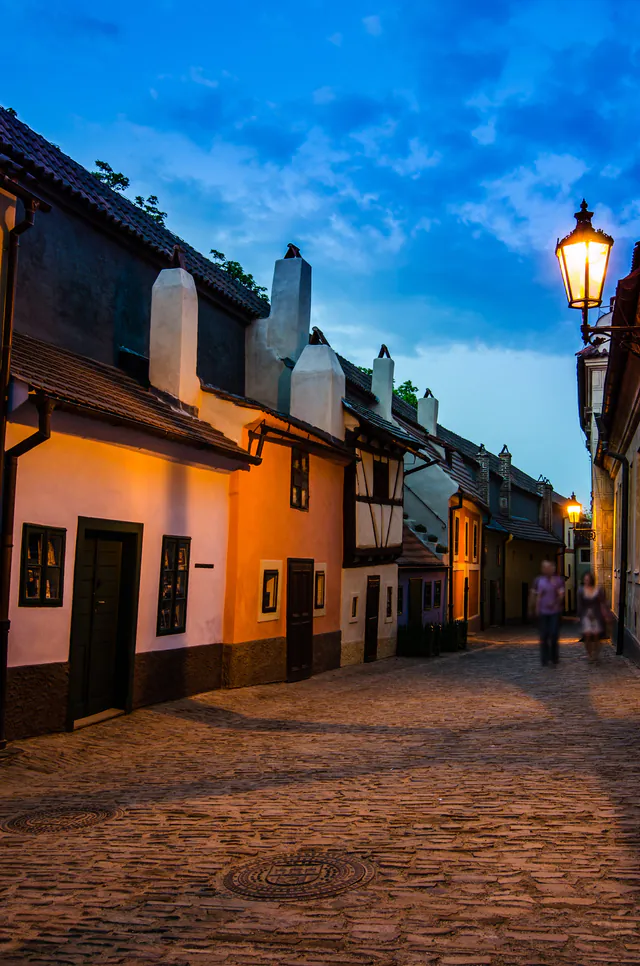
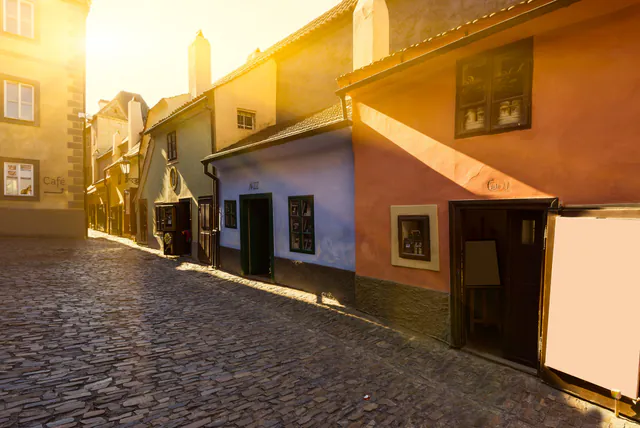
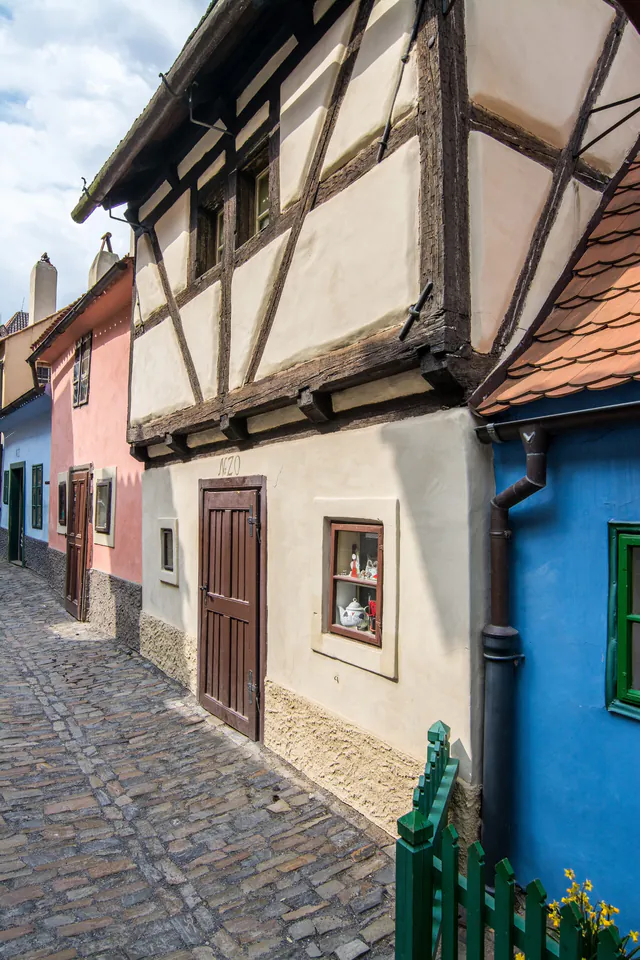
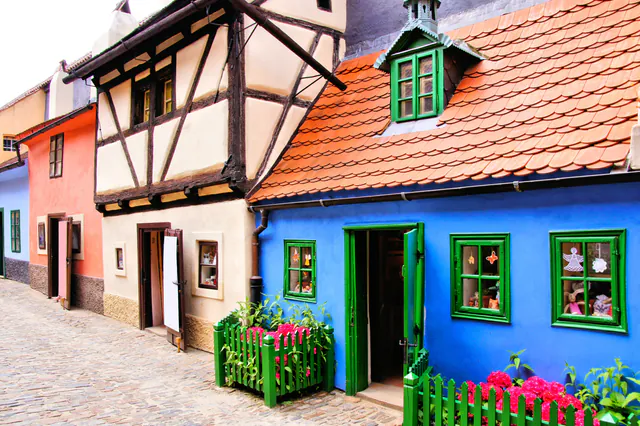
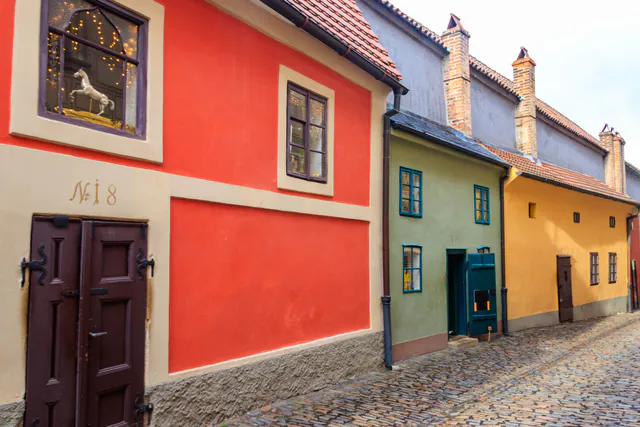
You'll find Golden Lane Prague pressed against the castle’s northern walls. It’s a row of tiny, toy-like houses painted in bold primary colors. They look like props. But these are real homes built into the defensive arches of the 16th-century fortifications. It’s a tight squeeze. You’ll swap the massive Gothic scale of St. Vitus for something much more human. Walk the uneven cobblestones. Feel the history. This is where the castle’s working class lived, from marksmen to goldsmiths.
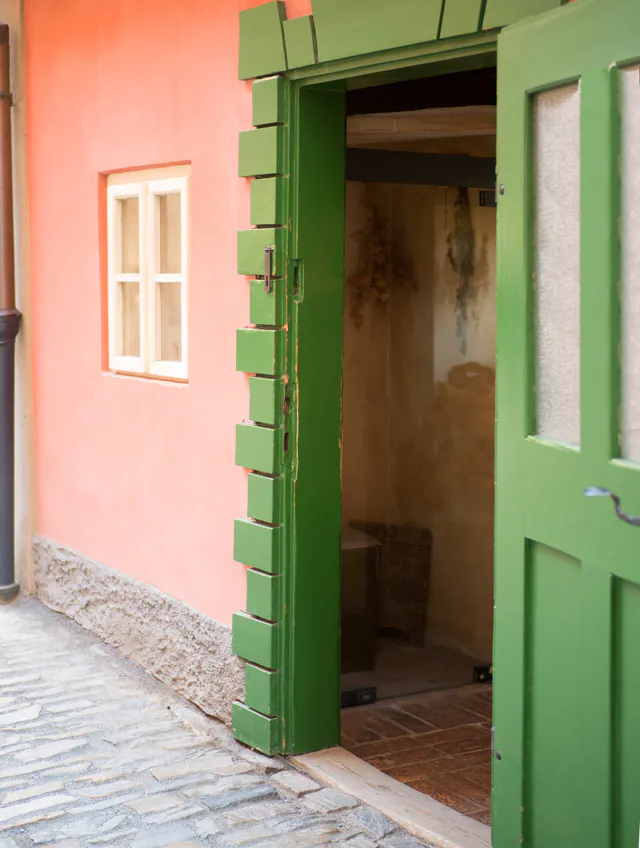
Duck your head. The doorframes are low for a reason. Space was expensive in 1597. Residents crammed their lives into narrow masonry arches. Inside, timber ceilings feel like they’re pressing down. Narrow stairs twist up to cramped lofts. It's tight, but it's intimate. Try to visit during the last hour of light. The sun hits the facades designed by Jiří Trnka and makes the whole alley glow. It’s pure cinema.
Today, the lane is a curated museum. You can peer into 11 historic houses. Behind glass, you’ll see five centuries of domestic life. One room shows the spartan bed of a Renaissance soldier. Another holds the cluttered herbs of a 20th-century mystic. Don't skip the upper floor. A long defensive corridor connects the houses. It's packed with one of the best armor collections in Europe.
You need to see this. History buffs will love the grit of the working-class recreations. Literary types come for House 22. Franz Kafka lived here. You can feel the isolation that fueled his best work. It strips away the royal pomp. It shows the human side of the castle. It's the real soul of Prague.
Photos
History & Significance
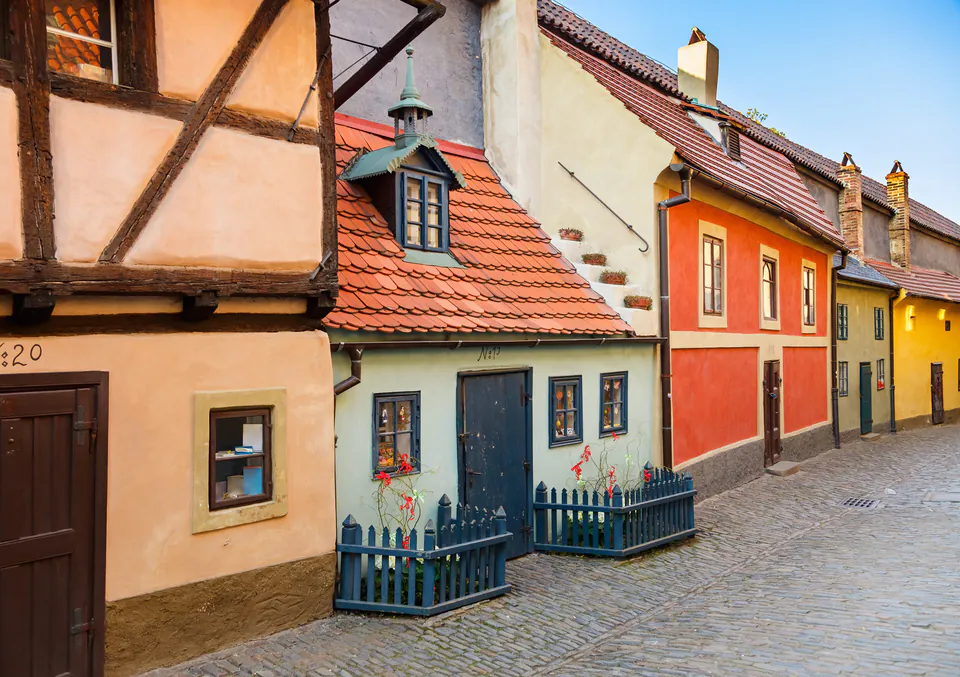
King Vladislav II built the walls in the late 1400s. But the street started on September 16, 1597. Emperor Rudolf II let 24 marksmen build modest shacks in the arches. By the 1600s, the shooters left. Goldsmiths moved in. That’s how it became Zlatá ulička. Rent was dirt cheap in the early 1900s. Franz Kafka wrote in House 22 from 1916 to 1917. Nobel winner Jaroslav Seifert lived here in 1929. Architect Pavel Janák restored the whole strip between 1952 and 1955.
The Architectural Genesis and Military Origins of the Jagiellonian Fortifications
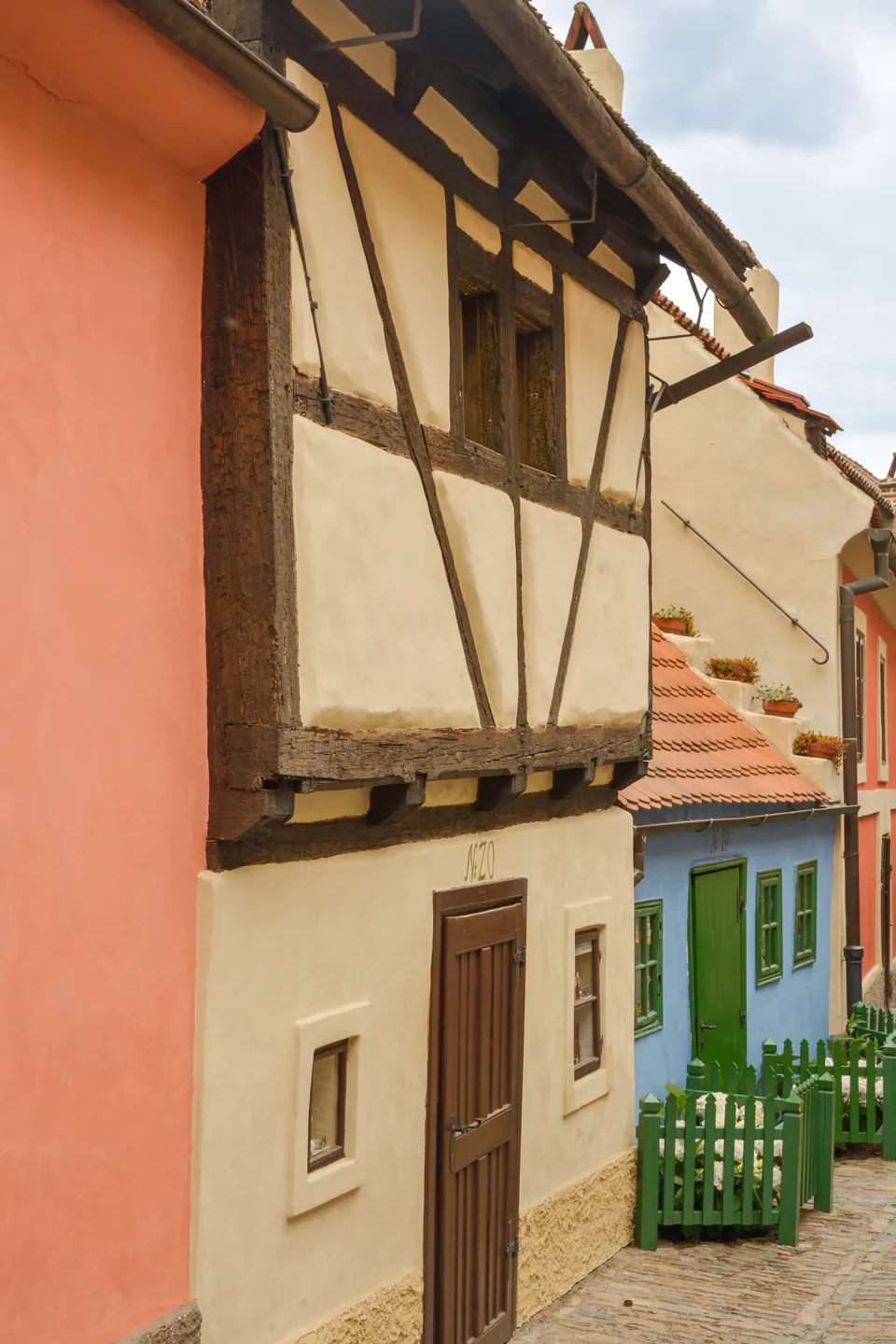
Military need built this street. King Vladislav II Jagiello wanted a strong north wall for the castle. He got it. In 1597, Rudolf II let 24 "red musket" guards build quarters in the stone arches. They had rules. No windows facing out. They used cheap mud, stone, or wood. The result? Tiny rooms forced into a fortress. These men paid for their own shacks. They lived on top of each other.
Each house was about 400 centimeters wide. They shared one toilet. They carried water from the castle square. It was tough. But it kept the guards right next to their posts. They were the castle's front line.
Spatial Realities and the Peculiarities of Daily Life
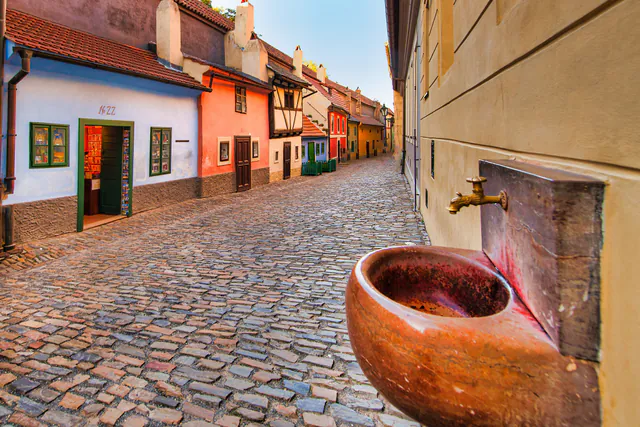
Life here was vertical. The houses couldn't grow out, so they went up. You enter a low door into a kitchen. It's small. Every inch counted. Check the floor. You'll see hatches for cellars where they kept food for winter. Look up. Folding ladders led to the sleeping lofts. Whole families slept there. Sometimes they even squeezed in lodgers.
Fresh air was rare. Rules banned outside windows. Most homes had one small pane facing the alley. Your view depended on your luck. You either saw the sky or the wall of the house opposite. It was a tight, tough community. They looked out for each other.
The Evolution into Zlatnická Ulička and the Enduring Myth of Alchemy
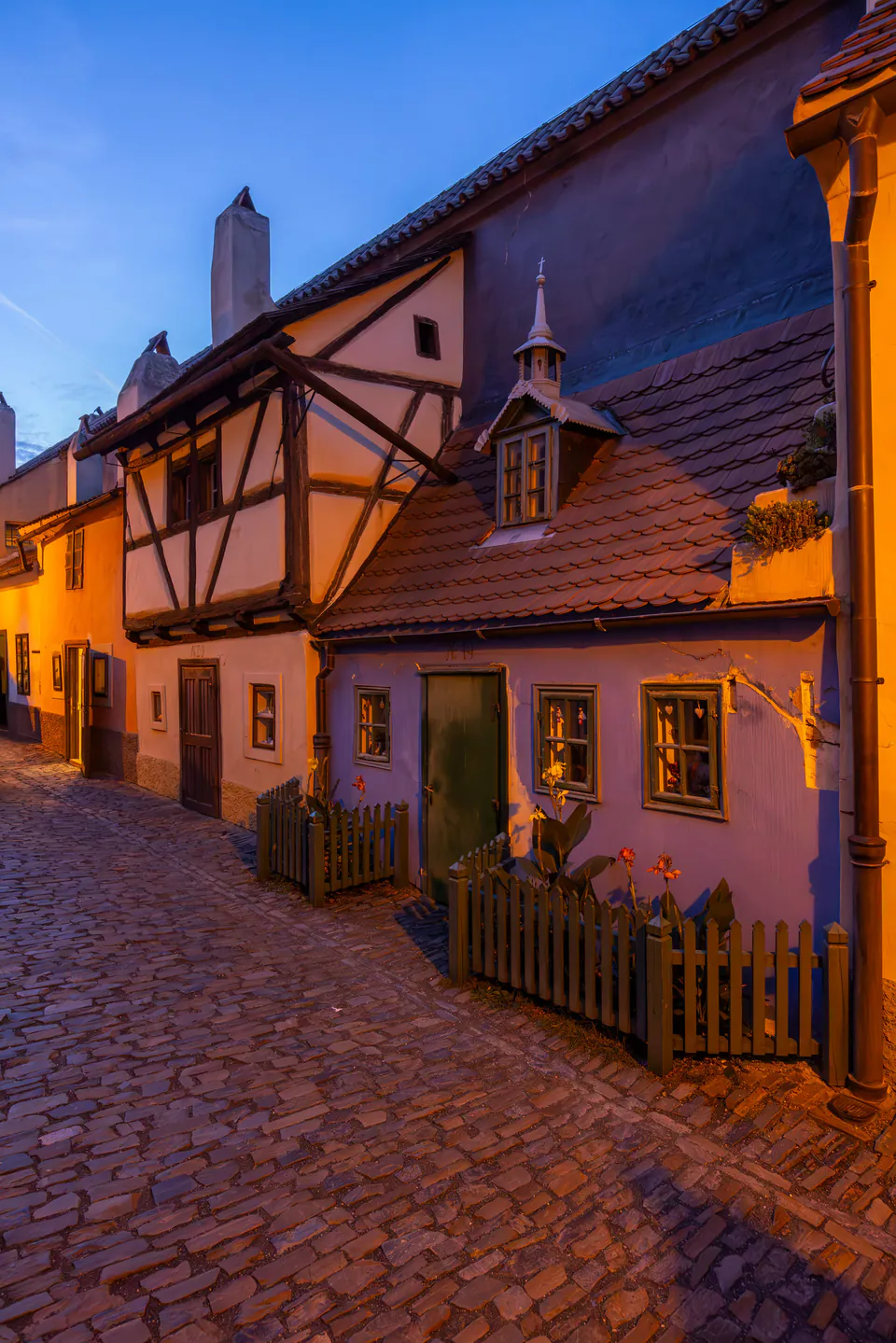
The marksmen left in the 17th century. Artisans took over. Goldsmiths loved it here. They were inside the castle walls, so city guild laws didn't apply. The street became Zlatnická ulička. Later, people shortened it to Golden Lane.
Then came the legends. People say Emperor Rudolf II’s alchemists lived here. They claim Edward Kelley and John Dee tried to make gold in these shacks. It's a myth. Real alchemists lived in much nicer quarters. The "gold" in the name comes from the jewelers. But the occult vibe stayed. In the early 1900s, a doctor named Uhle lived here. He blew his money on magic books. He died in a fire while holding a piece of gold. Or so the story goes.
Franz Kafka’s Literary Sanctuary in House Number 22
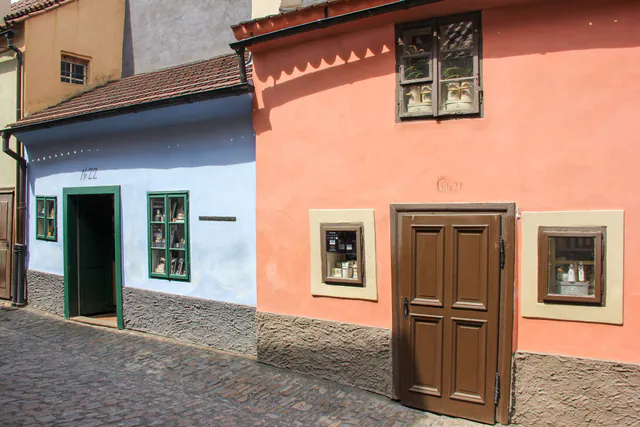
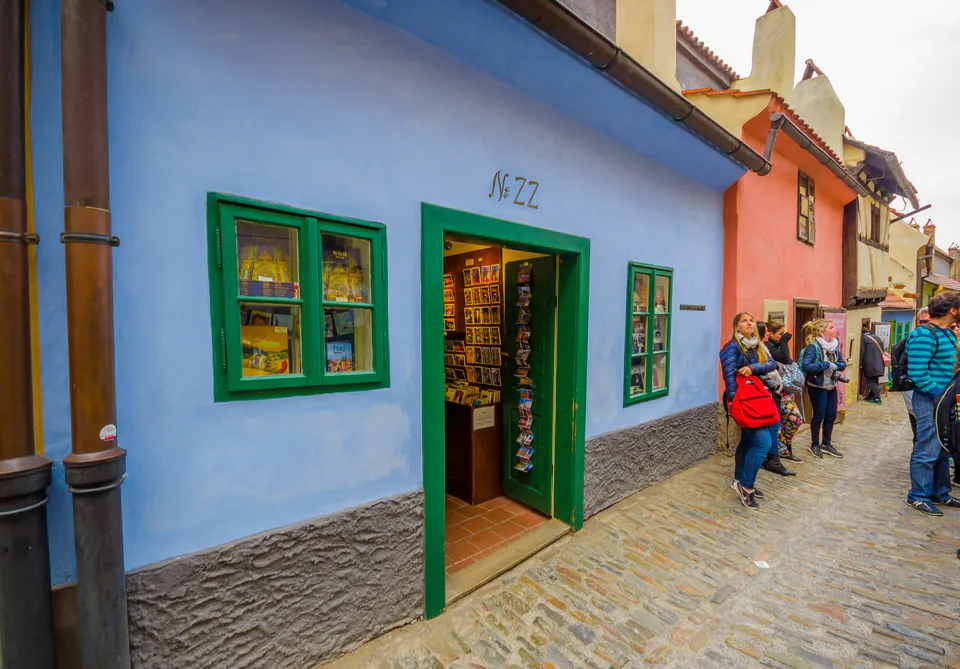
Franz Kafka is the street’s most famous resident. He used House 22 between 1916 and 1917. It’s the blue one. His sister Ottla rented it as a hideout. Kafka loved it. He escaped the noise of his family’s Old Town flat. The silence helped him focus.
House 22 is tiny. It’s just one room with a view of the Stag Moat. Kafka told his fiancée it was special to shut out the world. He’d work his day job, eat, and write here until midnight.
This was his peak. He wrote most of A Country Doctor in this cramped room. The castle’s walls and bureaucracy likely inspired his book The Castle. Now, House 22 is a bookstore. Go inside. It still feels like a sanctuary.
Tours & Experiences Nearby
Top-rated tours and experiences starting near Golden Lane (Zlatá ulička).
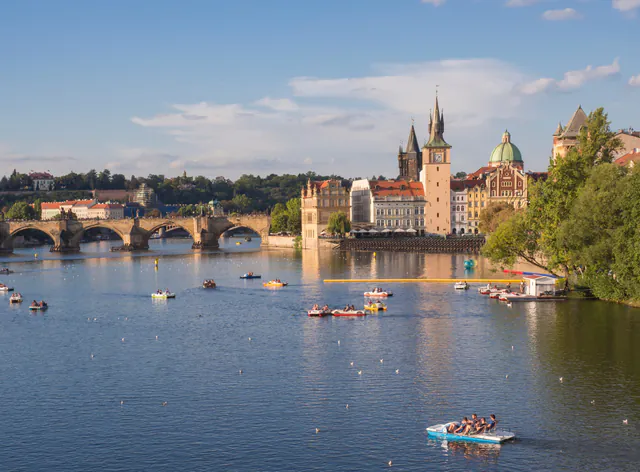 bike tour
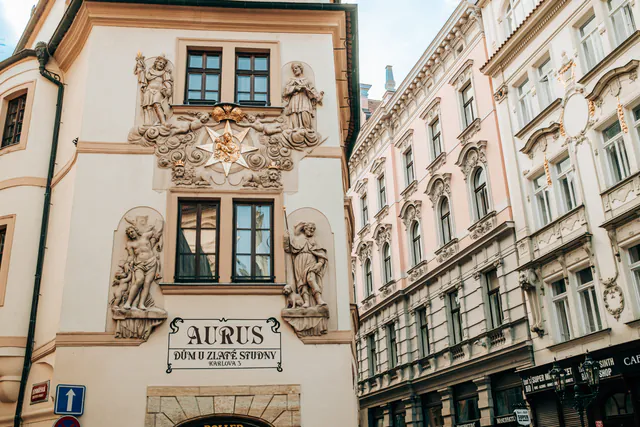 walking tour
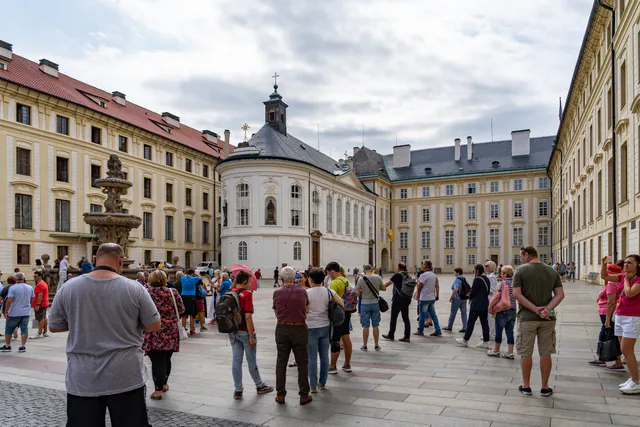 walking tour
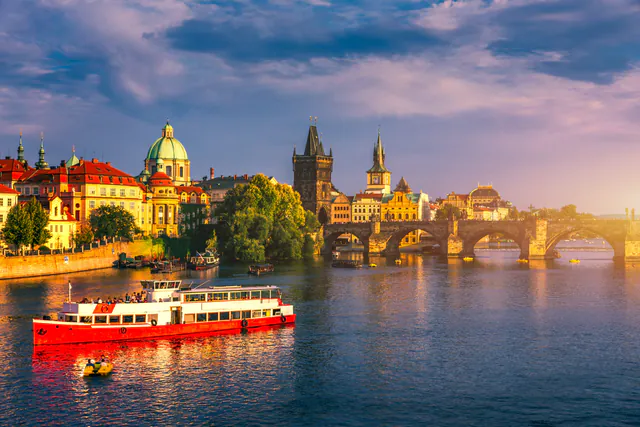 river cruise
Essential Visitor Tips
Find the Alchemist's Chamber. Look for the small metal door behind the cannons.
Watch your head. These 16th-century doorways are low. You'll need to stoop.
Check out the Upper Armory. It's a long gallery of swords and armor above the houses.
Go down into Daliborka Tower. The 15th-century dungeon has real torture tools.
Visit House 12. It’s where Josef Kazda hid films from the Nazis.
Spot House 14. Madame de Thébes, a famous psychic, used to work here.
Best Time to Visit
"Get here at 09:00 sharp when Golden Lane opening hours begin or wait until just before 16:00 to avoid the worst crowds. April and October are best."
Nearby Hotels
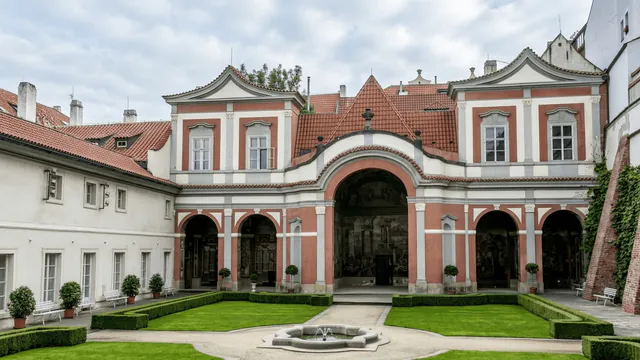
2 min walk (138m)
Private, direct access gate into the Royal Gardens of Prague Castle · Award-winning rooftop restaurant Terasa U Zlaté studně with panoramic views
Price From €250/night
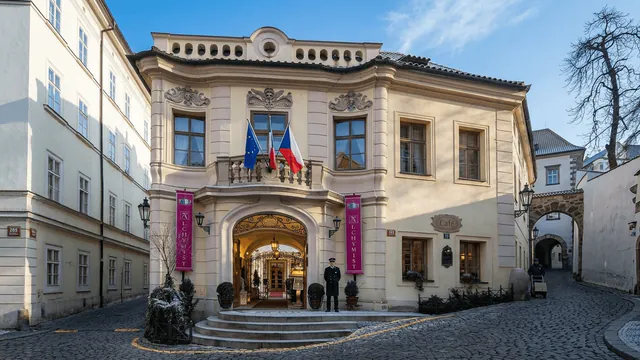
7 min walk (549m)
An expansive 11th-century Gothic cellar housing the tranquil Ecsotica Spa · A highly secluded, flower-adorned interior courtyard featuring a central fountain
Price From €215/night
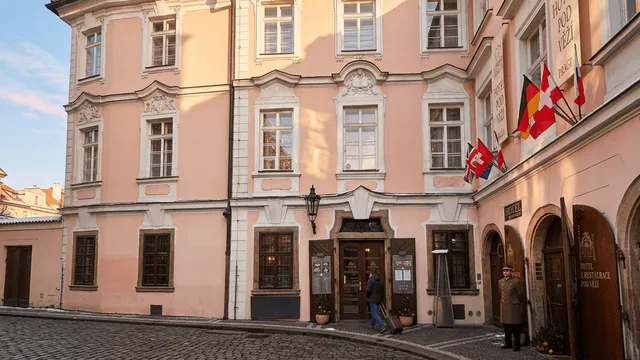
7 min walk (553m)
Unrivaled micro-location situated a mere 10 meters from the Charles Bridge Gothic Tower. · Private, guest-exclusive 3rd-floor rooftop terrace providing panoramic views of Prague Castle.
Price From €160/night
Nearby Restaurants
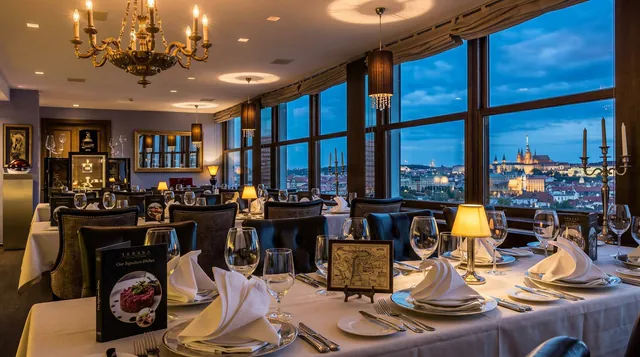
Terasa U Zlaté studně
International Fine Dining • Luxury
Head to the fourth floor of the Golden Well Hotel to find Prague's best seat. Yo...
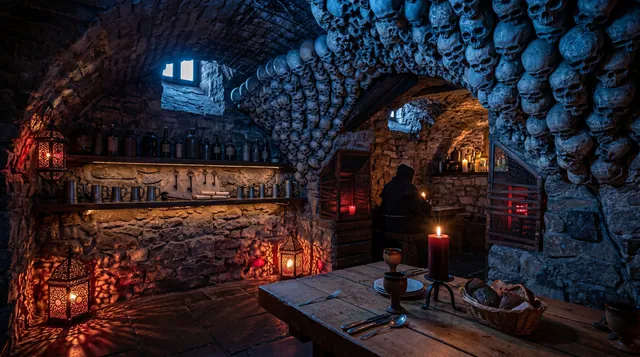
Tavern U Krále Brabantského
Czech Casual • Premium
Duck off the Royal Route into the shadows of Malá Strana and you'll find a place...
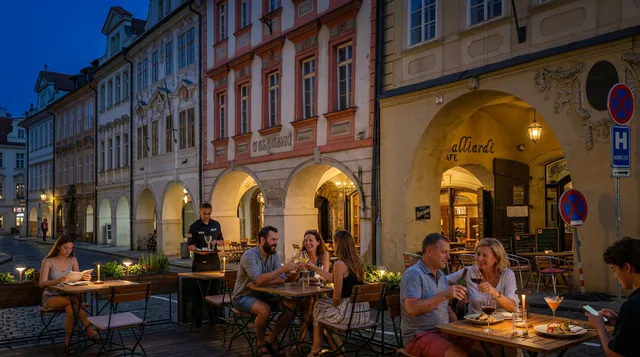
Restaurace U Glaubiců
Traditional Czech Casual • Moderate
You'll find Restaurace U Glaubiců right on Malostranské náměstí, sitting under t...
Frequently Asked Questions
Where exactly did Franz Kafka live on Golden Lane?
Did alchemists really live and work on Golden Lane?
What can visitors see inside the tiny houses on Golden Lane?
How do I find Golden Lane once I am inside the Prague Castle complex?
What other attractions are located right next to Golden Lane?
What should I bring for a visit to Golden Lane?
Is Golden Lane safe for solo travelers and families?
Can you see historical weapons and armor at Golden Lane?
What are the opening hours of Golden Lane (Zlatá ulička)?
How much does it cost to visit Golden Lane (Zlatá ulička)?
How long should I spend at Golden Lane (Zlatá ulička)?
Is Golden Lane (Zlatá ulička) wheelchair accessible?
Quick Facts
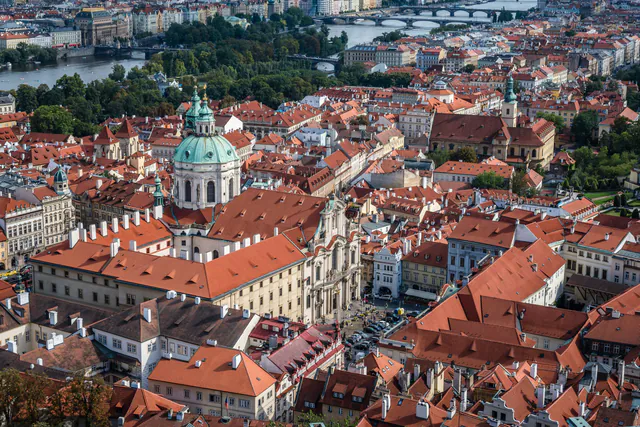
The Neighborhood
Malá Strana: Malá Strana
Read Guide