Schloss Schönbrunn
Palace
About the Experience
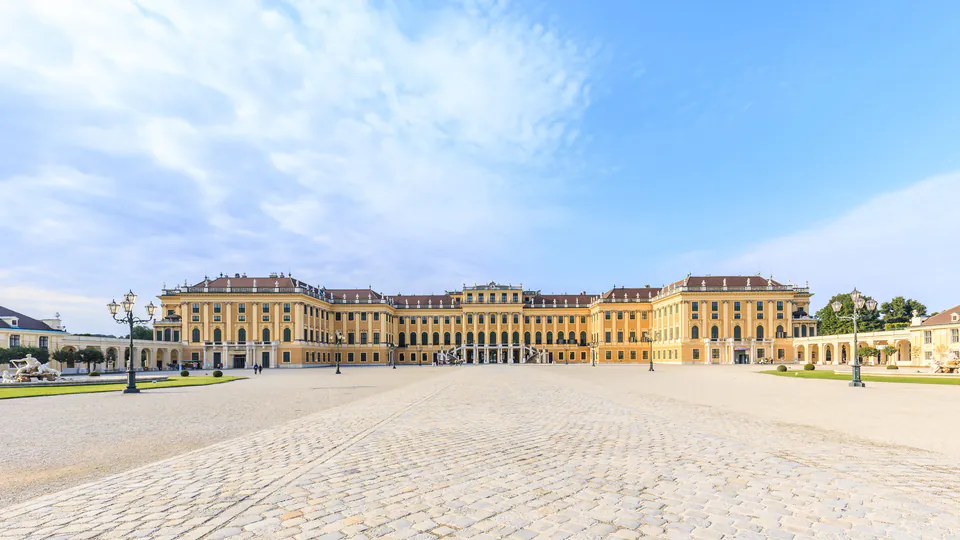
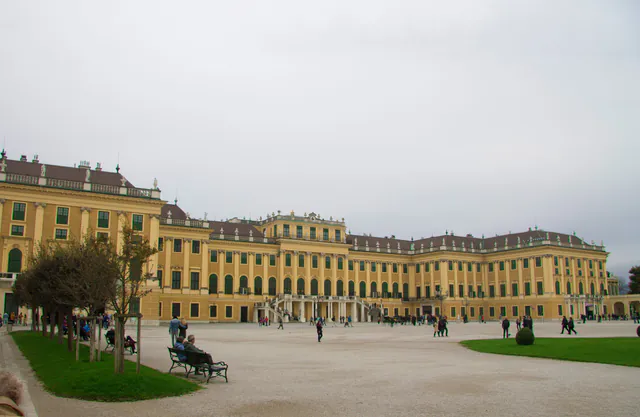
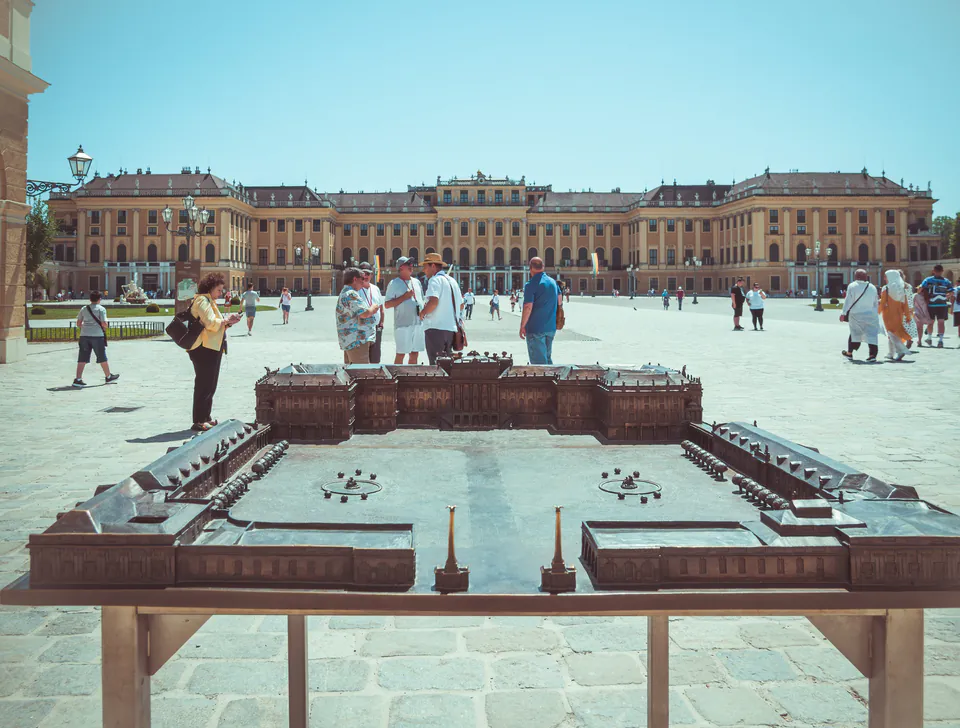
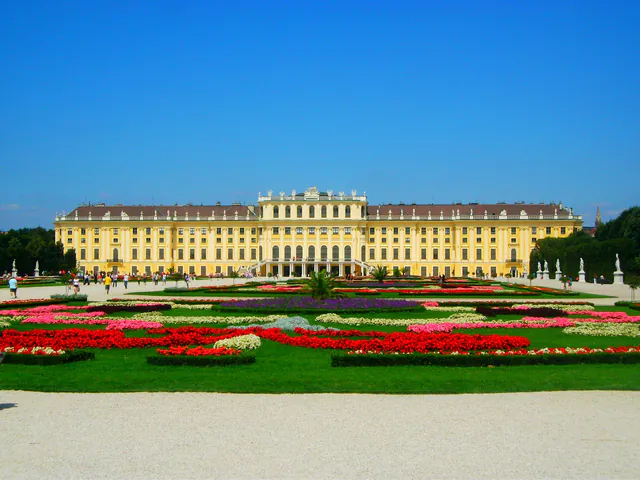
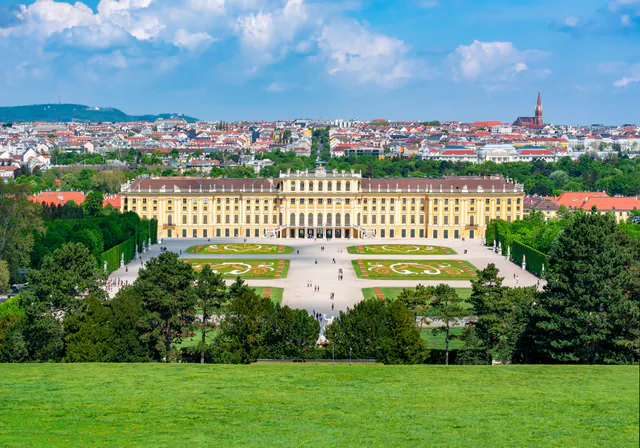
Schönbrunn Palace stands as the quintessential architectural embodiment of the Habsburg dynasty’s long-standing dominance over Central Europe, a sprawling yellow behemoth that captures the transition from Baroque rigidity to the whimsical, often melancholic, whispers of the Rococo era. To stand in the Great Courtyard is to feel the weight of centuries of protocol and the sheer scale of an empire that once spanned the globe. While Versailles may boast more unadulterated gold, Schönbrunn offers a more intimate, lived-in imperiality, particularly in the private quarters of Emperor Franz Joseph and the elusive Empress Elisabeth, known to the world as Sisi.
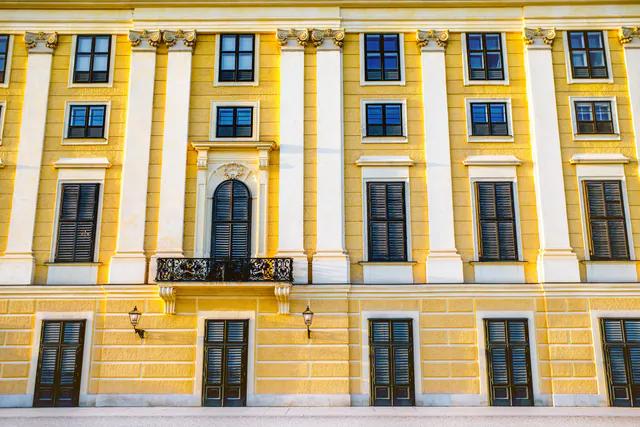
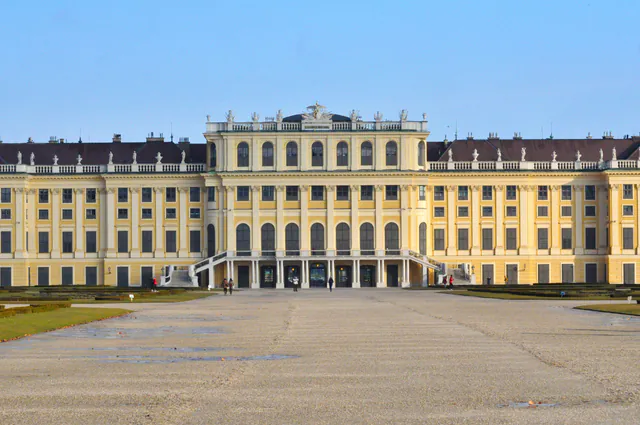
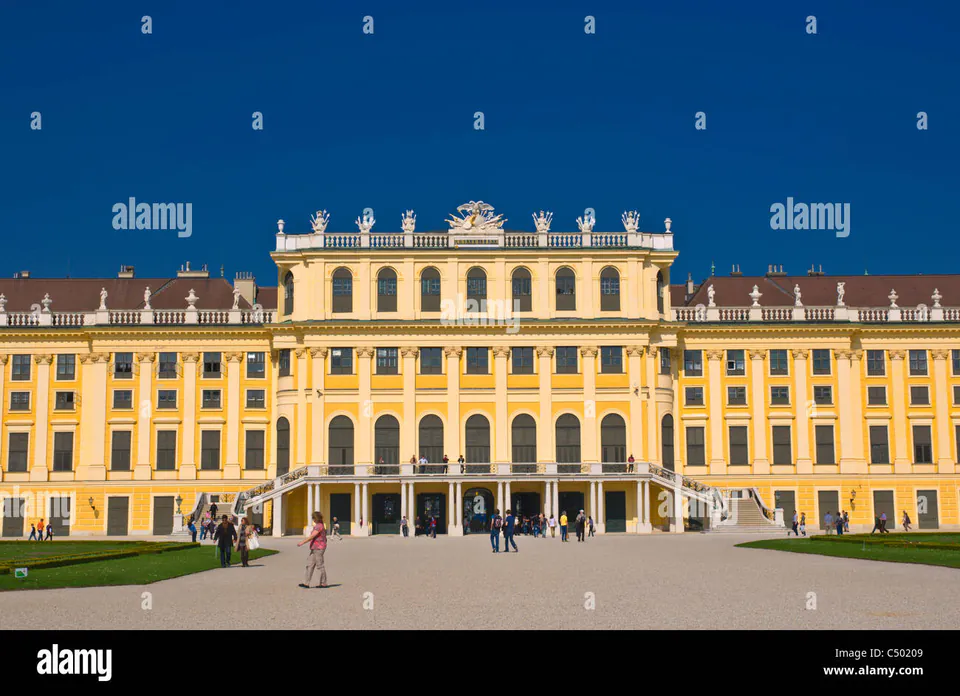
The palace’s signature "Schönbrunn Yellow" facade serves as a warm, welcoming contrast to the stiff military precision of the 18th-century court, reflecting an era where the monarchy sought to project both power and paternalistic elegance. A local guide would suggest that the true soul of the site lies not just in the gilded staterooms, but in the deliberate interplay between the structured architecture and the wilder, wooded fringes of the 160-hectare park. It is a place where Marie Antoinette played as a child and where a six-year-old Mozart charmed the Empress Maria Theresa in the Hall of Mirrors.
A visit here demands more than a cursory glance at the facade; it requires navigating the tension between the public "theatre" of the Great Gallery and the profound isolation felt in the "exotic" Millions Room, where Indo-Persian miniatures are encased in rosewood. It is a site of transition—where the Holy Roman Empire breathed its last and where the modern Austrian Republic began to take shape following the fall of the monarchy in 1918.
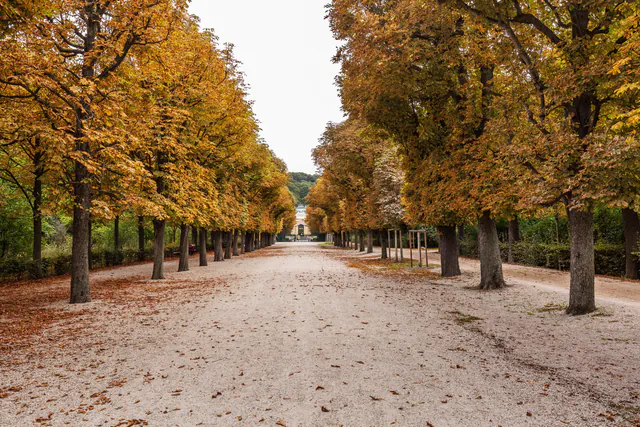
Beyond the walls, the gardens represent a triumph of human order over nature, featuring symmetrical paths that lead the eye inevitably toward the hilltop Gloriette. Whether one is exploring the hidden "Roman Ruins," wandering through the world's oldest zoo, or getting lost in the meticulously reconstructed maze, Schönbrunn remains the undisputed crown jewel of Austrian heritage, demanding a full day of immersion to truly comprehend its nuances.
Photos
History & Significance
The site’s recorded history begins in the 14th century as the "Katterburg" estate, a modest manor with a corn-mill and vineyards belonging to the Klosterneuburg monastery. It came into Habsburg possession in 1569 under Emperor Maximilian II, who utilized the grounds for hunting and established a pheasantry. The name "Schönbrunn" (Beautiful Spring) originated in 1612 when Emperor Matthias allegedly discovered an artesian well during a hunt. Following the destruction of the original buildings by Ottoman forces during the 1683 Siege of Vienna, Emperor Leopold I commissioned Johann Bernhard Fischer von Erlach to design a grand hunting lodge for his heir, Joseph I.
The most significant transformation occurred under Empress Maria Theresa (reigned 1740–1780), who engaged architect Nikolaus Pacassi to expand the lodge into a palatial summer residence. During this period, the palace became the cultural and political center of the empire. In the 19th century, court architect Johann Aman simplified the facade into its current Neoclassical form (1817–1819), and the iconic yellow color became the standard imperial scheme. The palace remained the primary summer residence until the fall of the monarchy in 1918, after which it passed to the Republic of Austria. It was designated a UNESCO World Heritage Site in 1996.
The Architecture
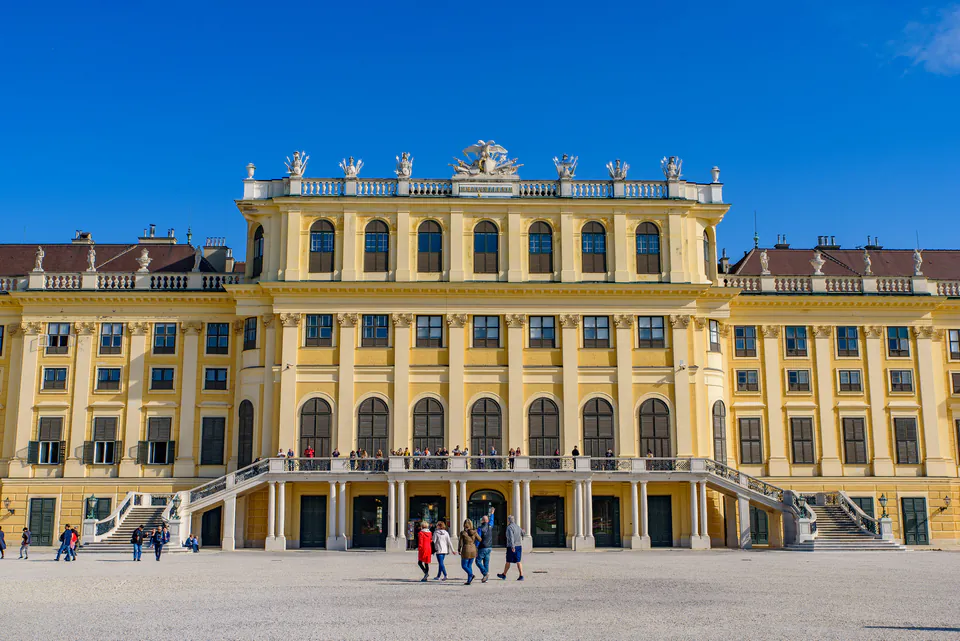
The architectural narrative of Schönbrunn Palace is one of immense ambition tempered by fiscal reality and the shifting tastes of successive monarchs. Originally, Johann Bernhard Fischer von Erlach, the preeminent Baroque architect of the era, envisioned a "Utopian" structure that would have surpassed Versailles in both scale and height, situated atop the hill where the Gloriette now stands. However, the actual construction of the hunting lodge began in 1696 at the foot of the hill, utilizing the foundations of the earlier Gonzaga-era château de plaisance destroyed during the Turkish siege.
The most profound changes occurred under Empress Maria Theresa, who transformed the hunting lodge into a palatial summer residence. Between 1743 and 1749, architect Nikolaus Pacassi introduced the Rococo style to the interior, characterized by exuberant ornamentation, mirrors, and "rocaille" forms that softened the rigid Baroque lines. Pacassi was responsible for the Great and Small Galleries and the removal of the central external staircase to create a more functional ground-floor carriageway.
In the 19th century, the palace underwent a Neoclassical "cleaning" under court architect Johann Aman. Between 1817 and 1819, Aman removed much of Pacassi’s ornate Rococo exterior decoration, simplifying the facade into the rhythmic, horizontal forms that remain today. This era also saw the finalization of the iconic "Schönbrunn Yellow" color scheme. While earlier versions of the palace were painted in light orange or golden ochre, the current yellow became the standard imperial livery in the mid-1800s, symbolizing the warmth and permanence of the Habsburg rule.
Visiting the Interior
A tour of the palace interior is a journey through the dichotomy of imperial life—the contrast between public grandeur and surprisingly austere private quarters. The Great Gallery, the palace’s architectural centerpiece, measures 43 meters in length and was the site of the empire's most significant balls and diplomatic functions. The ceiling frescoes by Gregorio Guglielmi are not merely decorative but serve as a political manifesto, depicting Maria Theresa and her husband Franz Stephan as the guardians of "Pax Austriaca" (Austrian Peace) and the personifications of sovereign virtues.
The Millions Room represents the pinnacle of 18th-century exoticism and wealth. Paneled in rare palisander wood (historically known as Feketin wood), the room is adorned with 60 Indo-Persian miniatures depicting life at the Mughal court. These miniatures were collaged into gilded rocaille frames, likely with the assistance of the imperial children. The use of mirrors placed directly opposite each other creates an "illusion of infinity," a visual metaphor for the eternal nature of the Habsburg dynasty.
In stark contrast, the 19th-century apartments of Emperor Franz Joseph reveal a man of rigorous work ethic and simplicity. His study and bedroom are remarkably functional, featuring an iron bed and modest furniture, a testament to his persona as the "first bureaucrat" of the empire. The apartments of Empress Elisabeth (Sisi), however, reflect her more complex personality, with rooms like the Staircase Cabinet and her private salon decorated in her favorite shades of lilac and rosewood. These private quarters provide a poignant human context to the gilded spectacle of the staterooms, revealing the personal toll of life within the imperial hierarchy.
The Surrounding Area
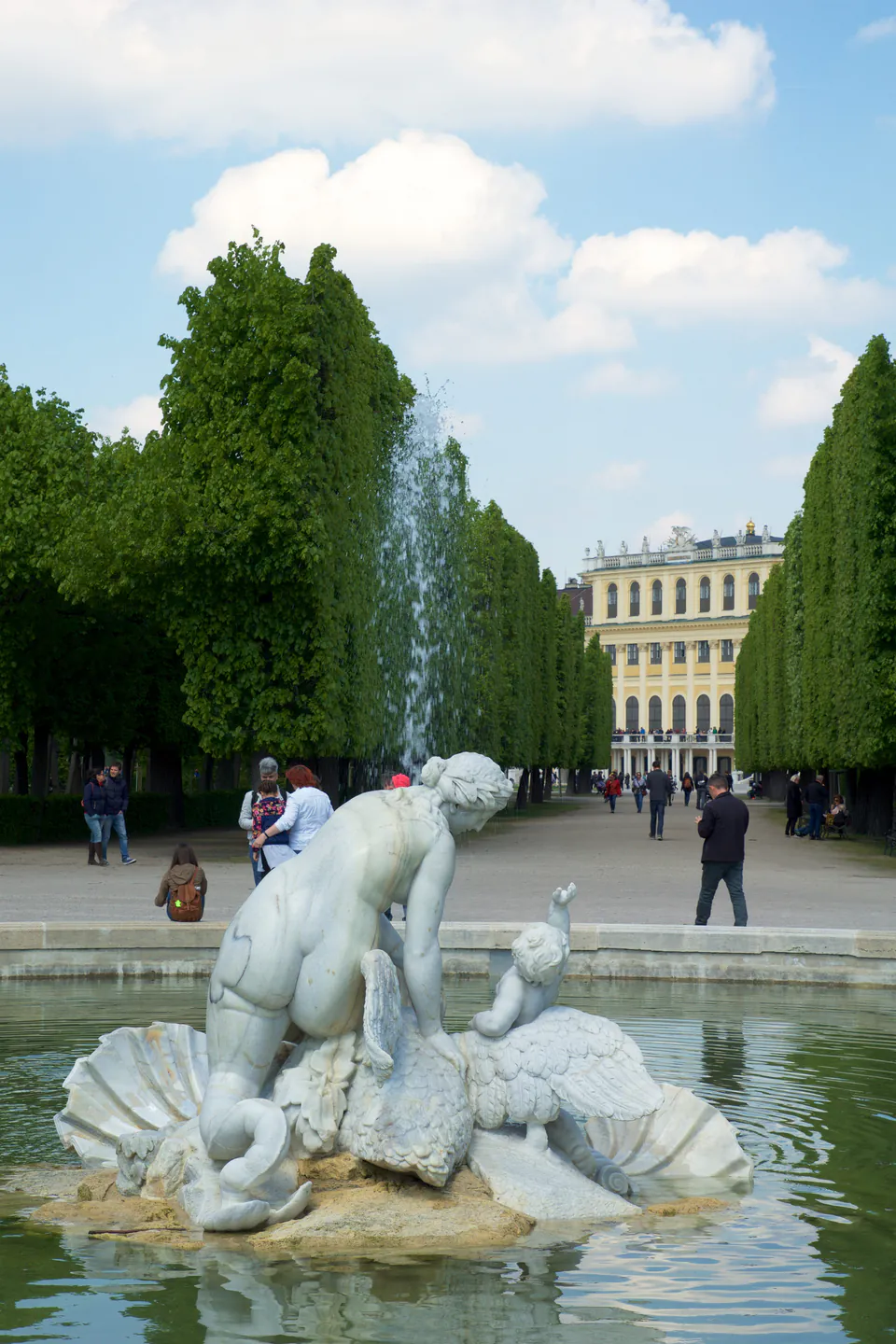
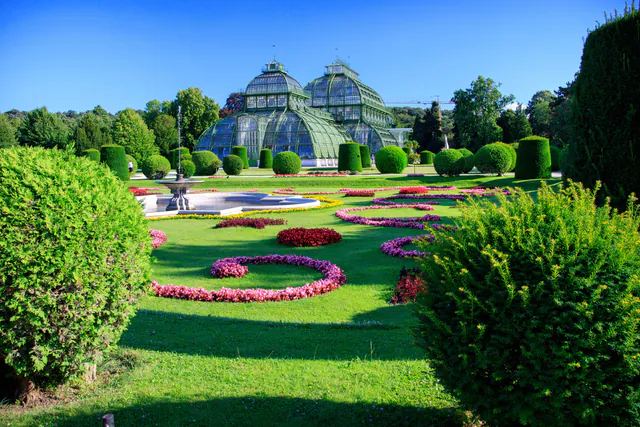
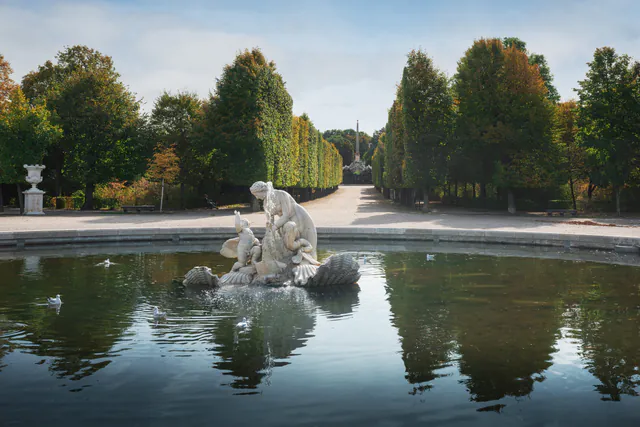
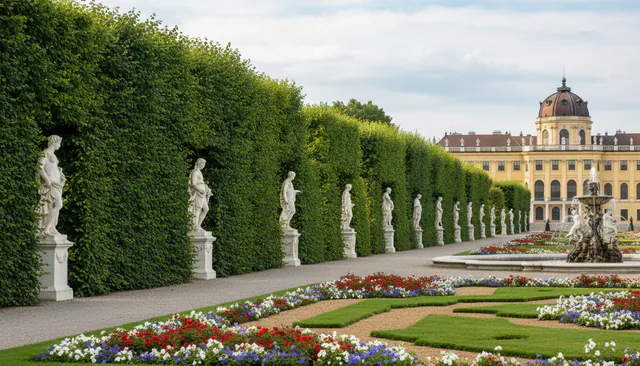
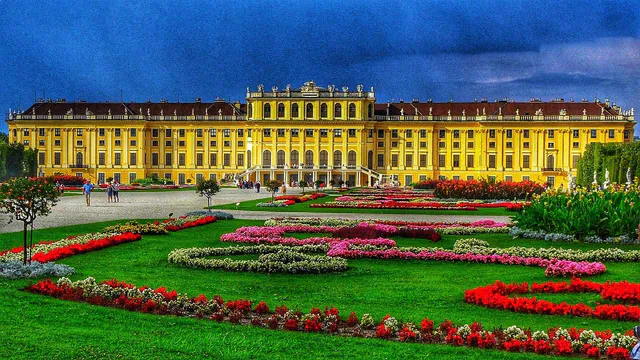
The 160-hectare park surrounding Schönbrunn Palace functions as an extension of the imperial staterooms, designed to manifest the ruler's control over nature. The Grand Parterre serves as a theatrical foreground, with symmetrical flower beds and statues in the "antique style" that direct the viewer's gaze toward the Neptune Fountain. Beyond the formal parterre, the park transitions into more varied landscapes, including the Palm House, an iron-and-glass marvel completed in 1882. It is the last great structure of its kind in continental Europe, housing three distinct climatic zones that maintain a collection of Mediterranean and tropical flora.
The Gloriette, a monumental triumphal arch perched on the crest of the hill, provides the definitive panoramic view of Vienna. Completed in 1775, its militaristic decor echoes the triumph of Austrian arms, yet its primary function was as a "belvedere" or viewpoint. Today, it houses a modern café, allowing visitors to enjoy traditional Viennese coffee culture while surveying the palace and the distant spire of St. Stephen's Cathedral.
Finally, the Tiergarten Schönbrunn (Vienna Zoo) is a historical anomaly that remains a world-class conservation center. Founded in 1752 by Franz Stephan of Lorraine, it is the oldest zoo in the world still in operation. Its original Baroque architecture, including the central Breakfast Pavilion, creates a unique atmosphere where modern animal welfare (including a famous panda breeding program) occurs within an 18th-century setting. For families, the proximity of the Maze and Labyrinth, which includes the "Labyrinthikon" playground, makes the surrounding area of the palace as essential as the interior staterooms.
Photography Guide
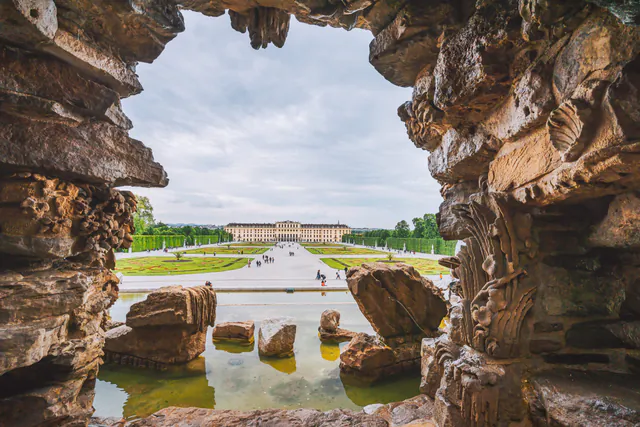
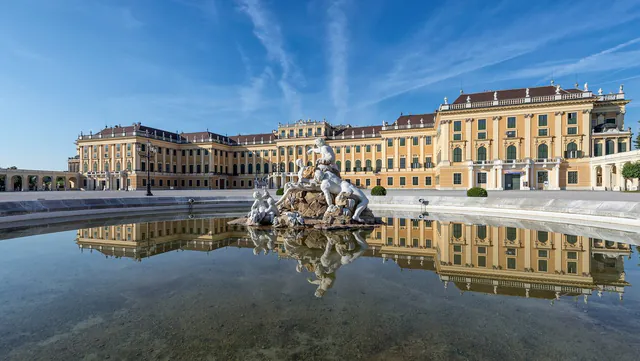
Capturing the scale and detail of Schönbrunn requires careful timing and an understanding of the palace’s symmetrical layout. The most sought-after shot is the reflection of the northern facade in the Parade Court Fountains. To achieve a perfectly mirror-like surface, one must photograph the fountains before 8:30 AM or after 5:00 PM when the pumps are turned off, leaving the water's surface undisturbed. The soft morning light during these hours also highlights the textures of the "Schönbrunn Yellow" without the harsh shadows common at midday.
The climb to the Gloriette offers two distinct photography perspectives. Looking up from the edge of the pond at the foot of the building provides a dramatic reflection of the Gloriette’s arches, especially during the "golden hour" when the low sun passes through the glass sections of the building. Conversely, the view from the Gloriette rooftop viewing terrace looking down over the palace toward the city is one of the most romantic vistas in Europe.
For those seeking "hidden gem" locations, the Palm House offers a unique iron-and-glass aesthetic that is particularly effective for architecture photography in the spring. Another underrated spot is the elevated platform in the Maze, which provides a rare top-down perspective of the Neptune Fountain and the Grand Parterre. While photography is strictly forbidden inside the palace itself to protect the historical materials and manage visitor flow, the courtyards and gardens are open for non-commercial photography, provided tripods and selfie sticks are not used in restricted areas.
Tours & Experiences Nearby
Top-rated tours and experiences starting near Schloss Schönbrunn.
 walking tour
 walking tour
 concert
Essential Visitor Tips
- **Strategy for crowds
** Visit the gardens and climb to the Gloriette first thing in the morning when the gates open at 6:30 AM, then schedule your palace entry for the first available slot at 8:30 AM to beat the tour bus groups.
- **The Sisi Pass advantage
** For those planning to visit the Hofburg and the Furniture Museum, this pass offers a 25% saving and includes the most comprehensive palace tour at Schönbrunn.
- **Hidden Garden Gems
** Do not overlook the "Roman Ruin" and the "Schöner Brunnen" fountain on the eastern side of the park; these are often ignored by visitors who stick only to the central Neptune Fountain axis.
- **Strudel Show integration
** The Apple Strudel Show in the Court Bakery runs hourly and provides a delightful culinary break while demonstrating the traditional techniques of Viennese pastry.
- **Photography loop-hole
** While photography is strictly forbidden inside the palace rooms, it is permitted throughout the gardens and at the Gloriette, which offers the best "reflection" shots from the pond.
- **The Children's Museum
** For families, the "Experience Schönbrunn" tickets often include the Children's Museum, where kids can dress up in imperial costumes and learn about the daily life of royal children.
Best Time to Visit
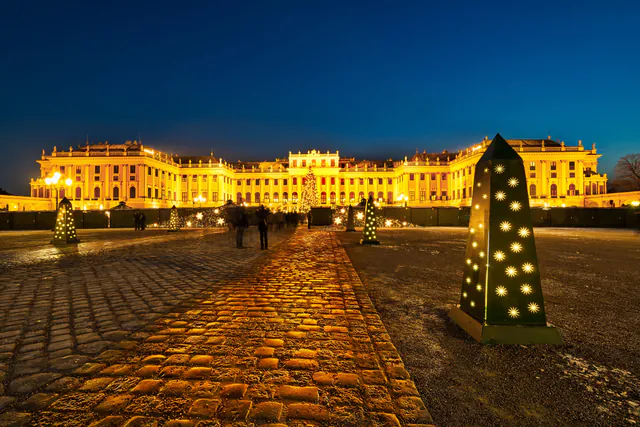
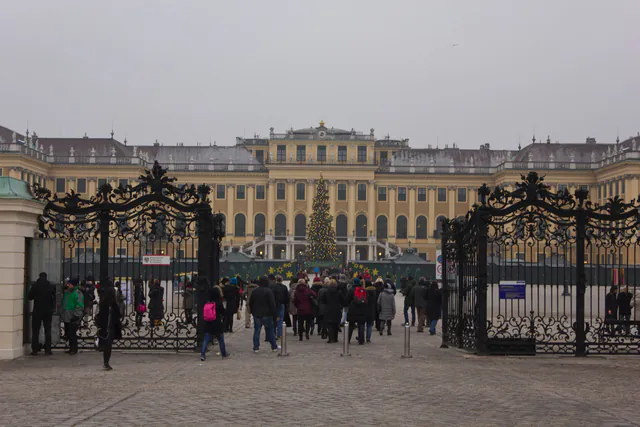
"The optimal time is late spring (April to June) for blooming gardens or December for the atmospheric Christmas market in the Parade Court."
Nearby Hotels
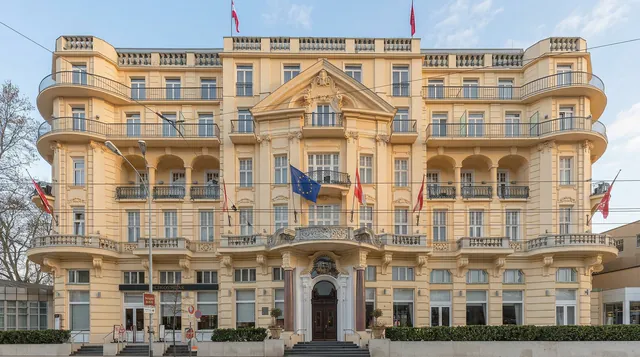
2 min walk (169m)
Former imperial guest house of Emperor Franz Joseph I · Direct proximity to Schönbrunn Palace and the Vienna Zoo
Price From €150/night
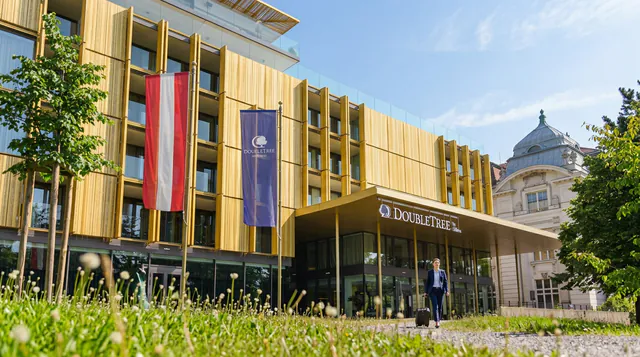
8 min walk (641m)
Located just a five-minute walk from the imperial Schönbrunn Palace and Gardens · Serene, green inner courtyard garden with terrace dining
Price From €120/night
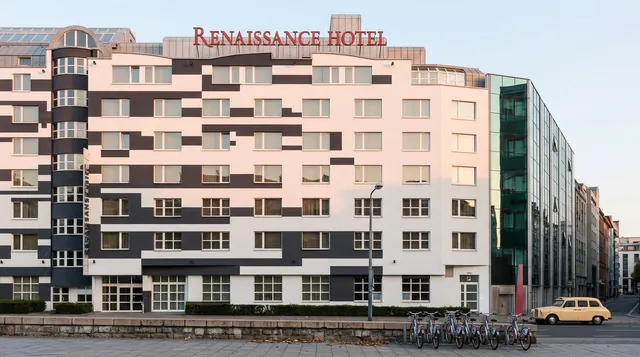
17 min walk (1.3km)
WUNDERKAMMER Drinking & Dining serving international cuisine and innovative cocktails · 200-square-meter wellness area featuring a salt room, sauna, and relaxation balcony
Price From €150/night
Nearby Restaurants
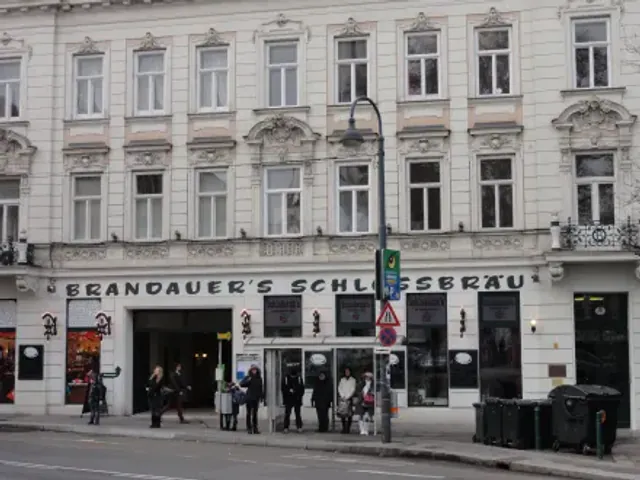
Brandauer Schlossbräu
International Casual • Moderate
Don't settle for the overpriced tourist traps surrounding Schönbrunn Palace. Wal...
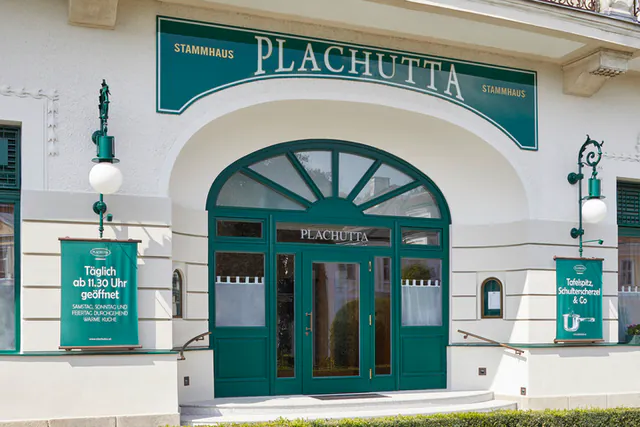
Plachutta Stammhaus Hietzing
International Fine Dining • Upscale
Don't come to Plachutta Stammhaus Hietzing for a quick bite. This is a 13th Dist...
Frequently Asked Questions
What are the opening hours of Schloss Schönbrunn?
How much does it cost to visit Schloss Schönbrunn?
How long should I spend at Schloss Schönbrunn?
Is Schloss Schönbrunn wheelchair accessible?
Quick Facts
The Neighborhood
13th District: Hietzing
Read Guide