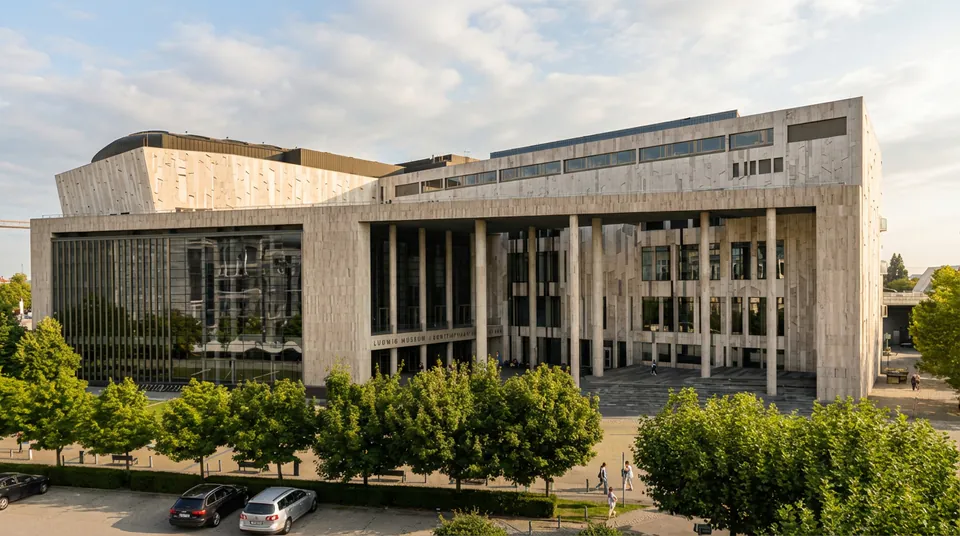
Ludwig Museum of Contemporary Art
Museum
About the Experience
Perched inside the sharp, glass-heavy Müpa complex on the Danube bank, the Ludwig Museum of Contemporary Art Budapest is Hungary's loud, proud answer to the Tate Modern. Forget the dusty 19th-century oil paintings in the city center. This place starts its clock at 1960 and runs straight through to the weird and wired present. It isn't just a quiet box for statues. It's a high-ceilinged, light-drenched arena where Eastern Bloc grit meets Western consumerist gloss. You'll find three floors of massive galleries that pull the river and the Buda hills right through the windows. It feels modern, looks expensive, and draws a crowd of art students and clued-in travelers who've had their fill of Baroque gold leaf. The big draw is the American Pop Art, but the real soul of the place is how it shows those Warhol and Lichtenstein classics alongside the gutsy, often secret work of artists who lived behind the Iron Curtain.
History & Significance
German collectors Peter and Irene Ludwig gave the museum its start in 1989. They wanted a global network of art spaces, and Budapest was their first big move as the Wall came down. It was a radical idea for 1980s Hungary. For the first time, a local museum focused entirely on the now. It spent its first decade tucked away in Building A of the Royal Palace at Buda Castle. The history was great, but the rooms were too cramped for massive modern installations. In 2005, the museum ditched the palace for a custom-built wing at Müpa in the Ferencváros district. This move gave the 700-piece collection the breathing room it deserved. Today, it remains a vital link in the international Ludwig Foundation, connecting Budapest to sister sites in Cologne, Vienna, and Beijing.
The Collections
The permanent collection is a masterclass in Cold War contrast. Thanks to the Ludwig donation, you'll walk past heavy hitters like Andy Warhol, Roy Lichtenstein, and Tom Wesselmann. These are the Western anchors. They're bright, consumer-obsessed, and surprisingly at home in Budapest. But don't just hunt for the household names. The museum shines when it shows you the 'Eastern' pillar. You'll see works by Hungarian neo-avant-garde artists who worked in the shadows of a socialist state. The curators have done the hard work of gathering pieces from Poland and the former Czechoslovakia too. It's fascinating to see how a painter in Budapest subverted the same Pop Art language that Warhol used in NYC. Since the 90s, the museum has pivoted toward video art and digital media. They buy pieces that tackle migration and digital identity. It's the only spot in Hungary where you can actually track global art trends from the last fifty years in one go.
The Building
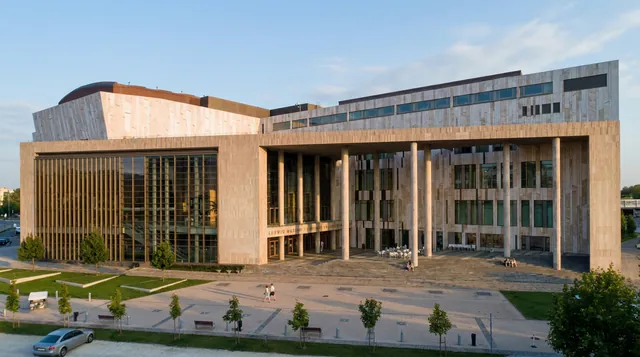
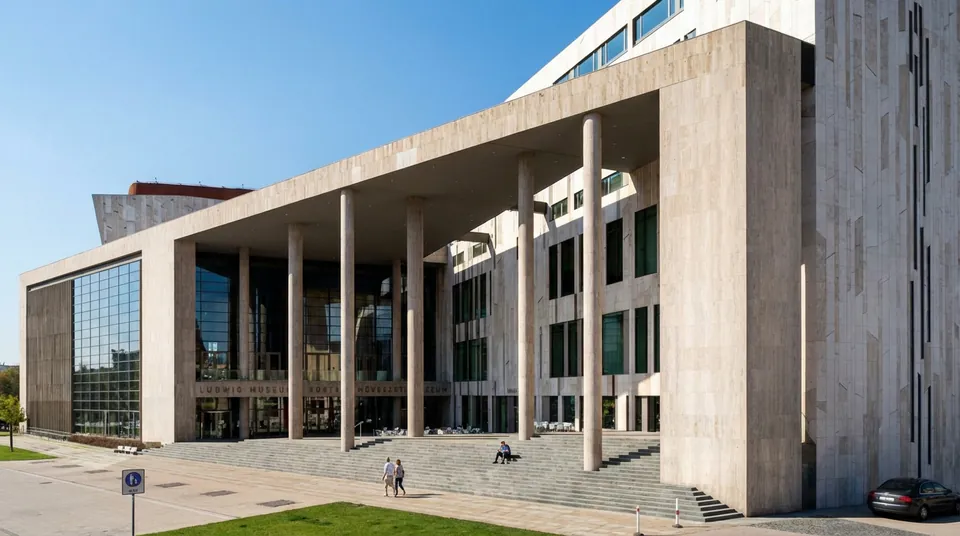
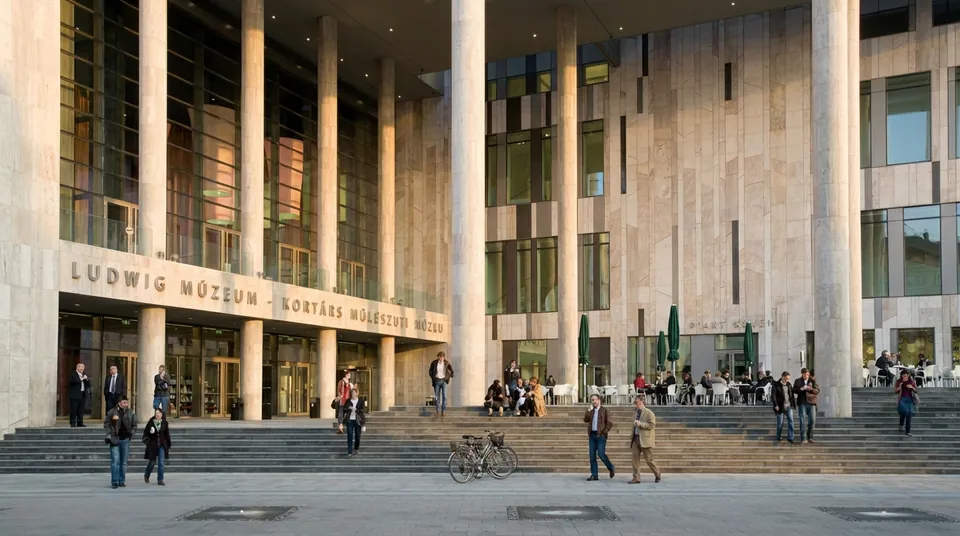
The Ludwig sits inside the Palace of Arts (Müpa), a massive limestone-and-glass landmark designed by the Zoboki, Demeter and Partners firm. It opened in 2005 and immediately changed the look of the southern Pest riverbank. Outside, it's a solid, monolithic block. Inside, it's all warm wood and soaring glass. The museum owns the wing closest to the Danube. That's a win for you because natural light floods the entire space. The galleries are huge and mostly open. This flexibility means curators can tear down walls or build entire worlds for new shows. You'll see monumental installations here that simply wouldn't fit anywhere else in the city. And the glass facades are genius. They turn the moving Danube and the evening city lights into a live backdrop for the art. Walk the grand staircase or ride the glass elevators even if you're just there for the vibe. The architecture alone is worth the trip.
Guided Tours & Programs
Contemporary art can be a headache if you don't have the key. The Ludwig knows this. They run a tight schedule of guided tours in multiple languages to help you decode the more abstract stuff. They don't just recite dates. They tell you why a pile of trash or a grainy video mattered to the person who made it. If you have kids, bring them. This isn't a 'don't touch' kind of place. The Ludwig Studio hosts creative workshops and weekend sessions where children actually get their hands dirty. It's a smart way to bridge the gap between high art and real life. The museum also acts as a clubhouse for the local creative scene. You can catch artist talks, film screenings, or lectures that go deep into the temporary exhibits. Most of these are free with your ticket. For the real nerds, the second-floor library has thousands of books on art theory and history that anyone can browse.
Essential Visitor Tips
Take Tram 2. It's often called one of the most beautiful commutes on earth. Ride it all the way to the 'Müpa – Nemzeti Színház' stop for a front-row seat to the Danube.
Find the first-floor terrace. Most people miss it. You get a sharp, low-angle view of the Rákóczi Bridge that most tourists never see.
Stay late on show days. Temporary exhibits often run until 20:00. It's the perfect way to kill time before a concert at the Béla Bartók National Concert Hall next door.
Save your money. Entry to the permanent collection is free on March 15, August 20, and October 23. Just be ready for the crowds.
Best Time to Visit
"Go on a Tuesday afternoon. It's dead quiet, and you'll have the massive galleries mostly to yourself. Skip the weekend school groups if you can."
Nearby Hotels
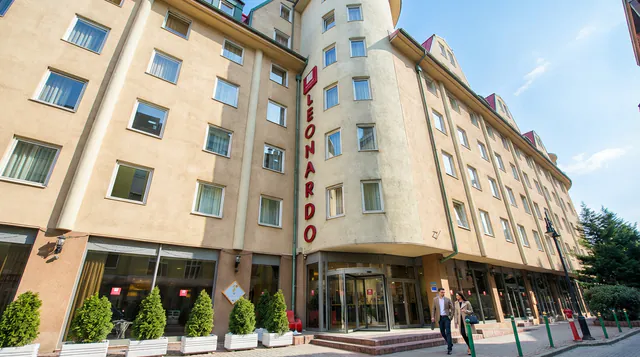
17 min walk (1.4km)
Located on Tompa Street, a leafy pedestrian-friendly avenue known for local gastronomy · On-site health club with a fully equipped gym and Finnish sauna
Price From €85/night
Frequently Asked Questions
How do I get to the Ludwig Museum of Contemporary Art using public transport?
Are there places to eat near the Ludwig Museum of Contemporary Art?
Is photography allowed inside the Ludwig Museum of Contemporary Art?
What kind of art should I expect to see at the Ludwig Museum of Contemporary Art?
Is the Ludwig Museum of Contemporary Art part of the Palace of Arts?
What are the best things to do near the Ludwig Museum of Contemporary Art?
Does the Ludwig Museum of Contemporary Art offer guided tours in English?
Can I visit the Ludwig Museum of Contemporary Art on a rainy day in Budapest?
What are the opening hours of Ludwig Museum of Contemporary Art?
How much does it cost to visit Ludwig Museum of Contemporary Art?
How long should I spend at Ludwig Museum of Contemporary Art?
Is Ludwig Museum of Contemporary Art wheelchair accessible?
Quick Facts
Find Hotels Nearby
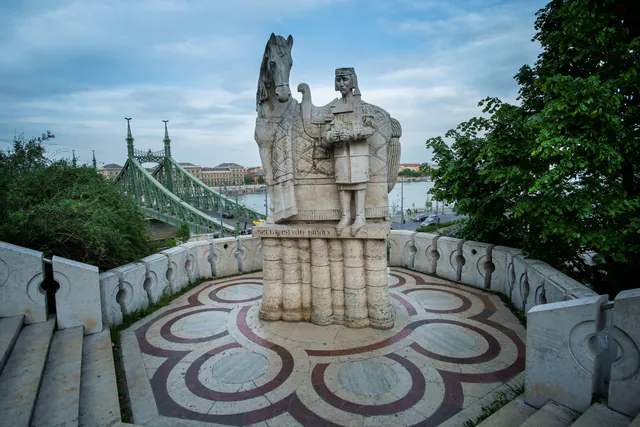
The Neighborhood
District IX: Ferencváros
Read Guide