House of Terror Museum
Museum
About the Experience
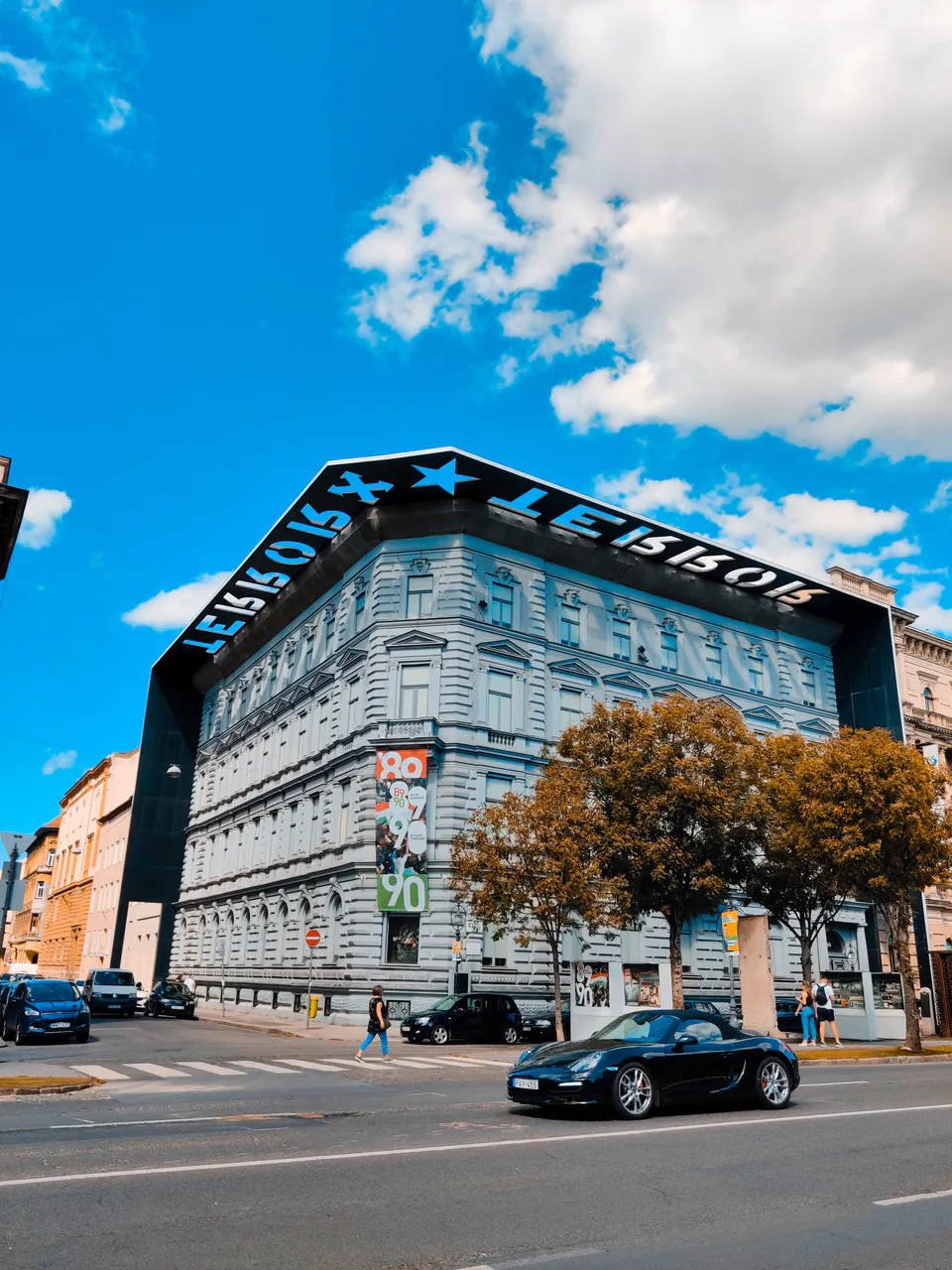
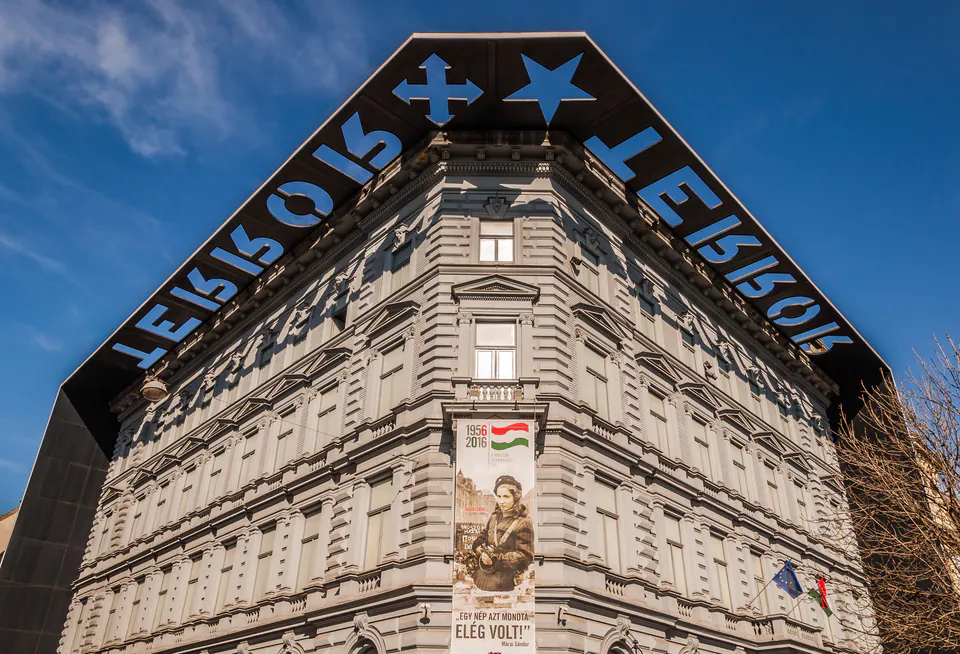
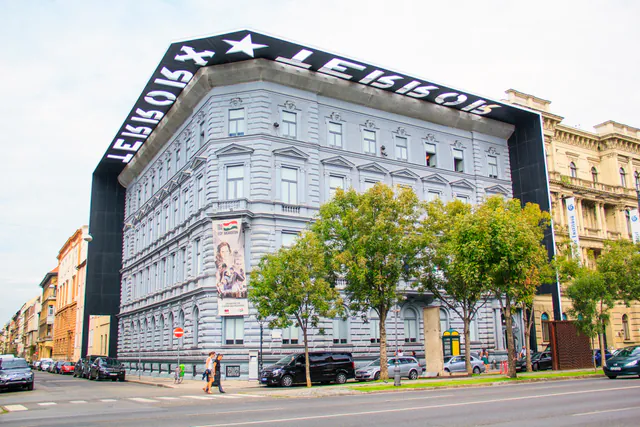
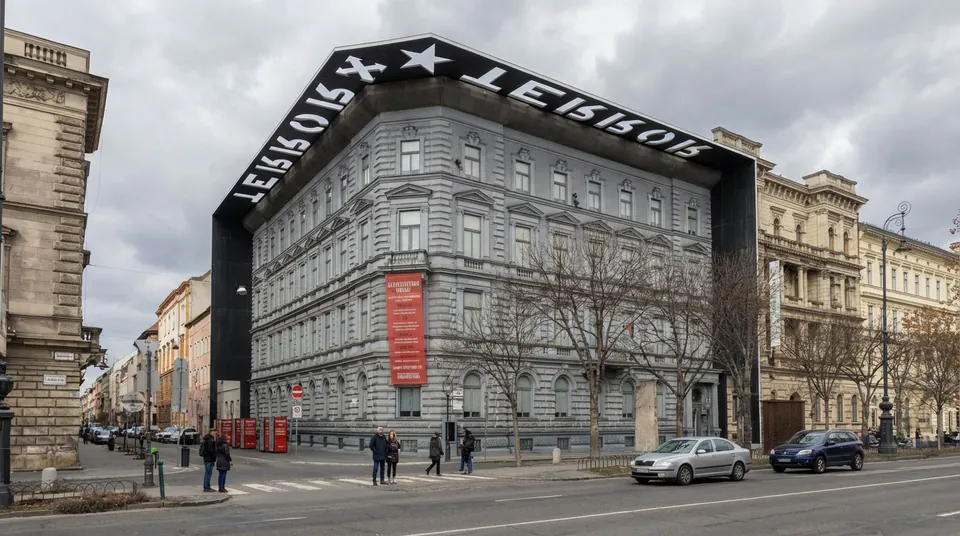
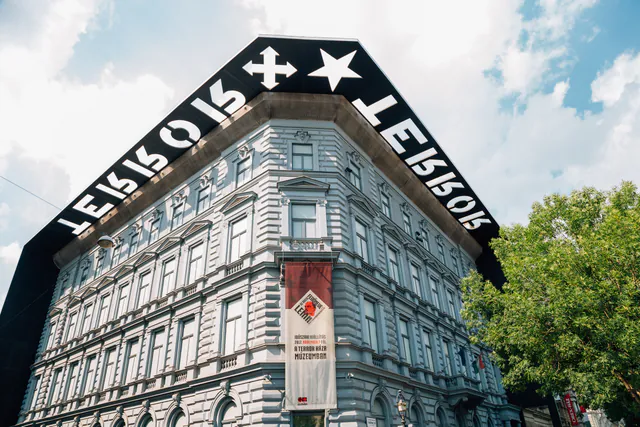
Walk down Andrássy út and you can't miss it. Number 60 doesn't blend in. A massive black metal cornice projects from the roof, punching the word TERROR into the sky. When the sun hits just right, the letters cast a grim shadow across the facade. This isn't a dry history lesson. It's a high-voltage, sensory-heavy memorial to the people broken by the two regimes that suffocated Hungary in the 20th century. Inside, the air feels different. The street noise of the avenue vanishes, replaced by a low, industrial hum and music by Ákos Kovács that sets a deliberate, uneasy tone. You start at the top and work your way down. It's a physical descent into the country's darkest years. You'll navigate through rooms packed with propaganda, high-tech screens, and interrogation setups. It tracks the 'Double Occupation' of both Nazi Germany and the Soviet Union. The house of terror museum budapest doesn't pull punches. By the time you reach the basement, the theatricality ends and the reality of the damp, narrow prison cells takes over. It's a visceral, unsettling experience.
Photos
History & Significance
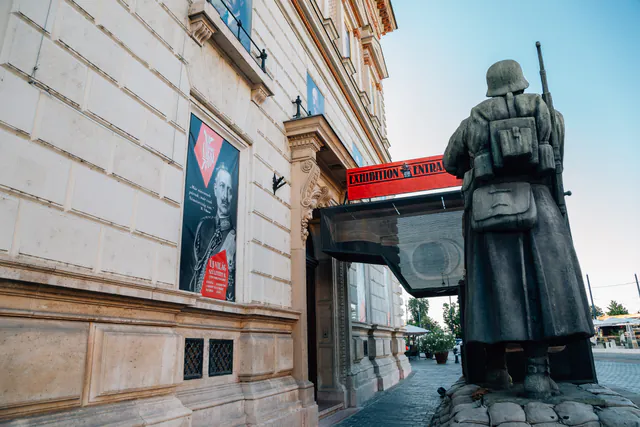
This Neo-Renaissance palace at 60 Andrássy Avenue started as a grand home in 1880, but its reputation turned poisonous in 1944. That's when the Arrow Cross Party, Hungary's own Nazi collaborators, turned it into the 'House of Loyalty.' They used the basement to torture and kill Jews and political rivals. When the Soviets arrived in 1945, the address stayed in the hands of the secret police, first the ÁVO and later the ÁVH. They weren't any kinder. The communist authorities expanded the basement into a labyrinth of nightmare cells that stayed active until 1956. After the revolution failed, the state turned the building into offices to scrub its history. It stayed that way until the wall fell. The museum finally opened on February 24, 2002, ensuring no one forgets what happened behind these walls.
The Collections
The tour moves in a straight line from 1944 to 1990. Start on the second floor with the Nazi occupation. You'll see the uniforms and the crude weapons of the Arrow Cross era. But the story shifts quickly. As you head to the first floor, the Soviet era takes over. The design here is bold and unapologetic. One room has a floor map detailing the Gulag system. Another features walls built from 'pork fat' bricks, a blunt nod to the forced agricultural quotas of the 1950s. The 'Room of Justice' recreates the sterile, terrifying vibe of a show-trial courtroom. In the 'Room of Propaganda,' you're surrounded by the smiling, fake optimism of socialist posters. It's less about glass cases and more about the psychological weight of living under a thumb.
Must-See Exhibits
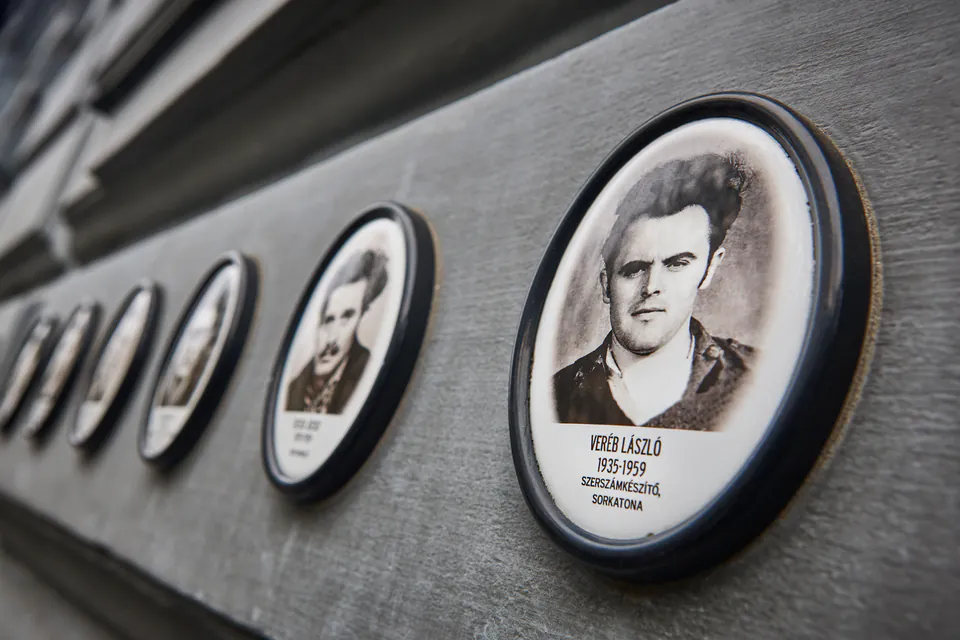
The T-54 tank parked in the courtyard is the museum's heavy hitter. It sits in a pool of oil, backed by a massive wall of victim portraits. It's a cold, industrial sight. In the basement, the 'Hall of Tears' offers a different kind of punch. It's a dark space lit by small lights with names of the dead etched into the walls. But the most effective part of the museum is the elevator ride. It's intentionally slow. You watch a video of a guard describing executions with zero emotion. When the doors slide open, you're in the actual prison cells. You'll see the 'fox-hole' and the 'wet cell' where prisoners were kept in water. No high-tech displays here. Just the raw, brick reality of the dungeon. This is where you'll want your house of terror museum tickets in hand to understand the true cost of the regime.
The Building
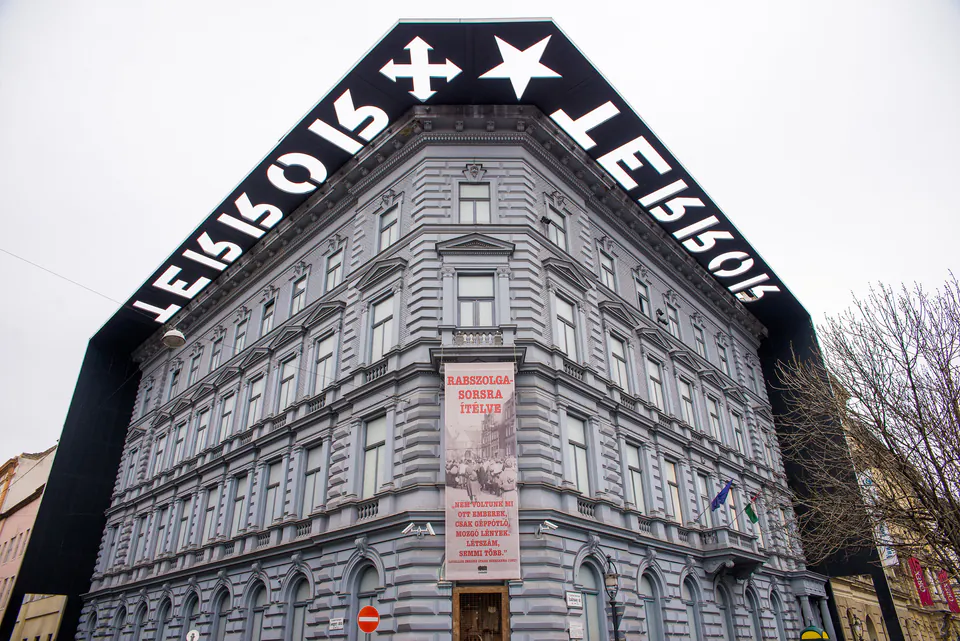
The building is a weapon of memory. Architects János Sándor and Kálmán Újszászy took a standard Neo-Renaissance palace and turned it into a grey, imposing block. The interior designer, Attila F. Kovács, made sure it felt claustrophobic. That black 'blade wall' on the roof is a masterstroke. It cuts through the skyline of Andrássy Avenue, signaling that this place isn't like its neighbors. By enclosing the atrium, the designers created a vertical shaft that makes you feel trapped as you look up. The contrast is the point. You have the elegant facade of a bourgeois palace on the outside and a factory for human suffering on the inside. It's a physical metaphor for how the secret police hid their work in plain sight.
Tours & Experiences Nearby
Top-rated tours and experiences starting near House of Terror Museum.
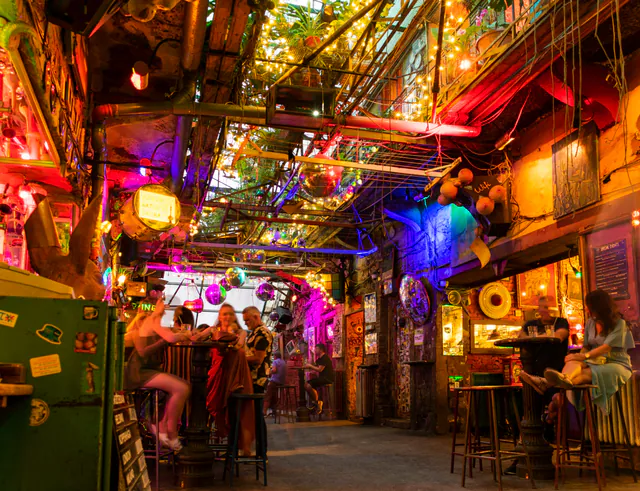 pub crawl
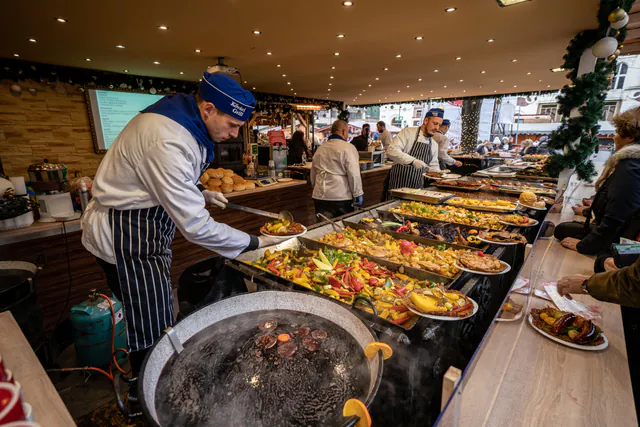 food tour
 wine tasting
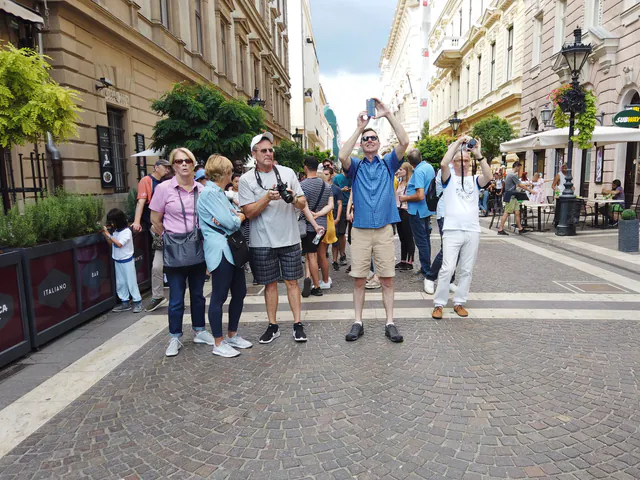 walking tour
Essential Visitor Tips
Pay for the audio guide. English wall text is sparse, and the printed sheets in the rooms are clunky. The audio narrative is what makes the experience click.
Keep your phone in your pocket. Guards are everywhere and they're strict. No photos means no photos. Respect the silence of the space.
Get your shot early. You can only photograph the T-54 Soviet tank in the atrium from the ground floor entrance area before you start the tour.
Bring a sweater. Even if it's 30 degrees outside, the basement levels are perpetually chilly. The atmosphere alone will give you the shivers.
Show up on a Tuesday morning. Long queues are the norm by midday. Arriving at 10:00 AM sharp on a weekday is your best bet to beat the crowds.
Watch the elevator video. The slow, agonizing crawl down to the basement features a guard explaining how they handled executions. Don't look away.
Best Time to Visit
"Get there at 10:00 AM on a Tuesday or Wednesday. You'll dodge the weekend crush and the school groups. Stay away on October 23rd unless you enjoy fighting massive crowds during national holidays."
Nearby Hotels
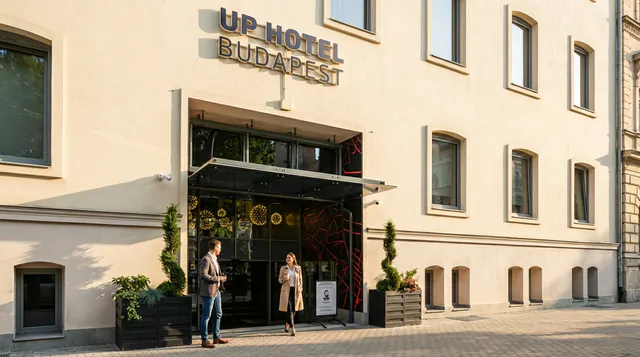
1 min walk (78m)
Housed in the historic 19th-century Posner Printing House · Fully integrated 'Smart' room controls via in-room tablets
Price From €125/night
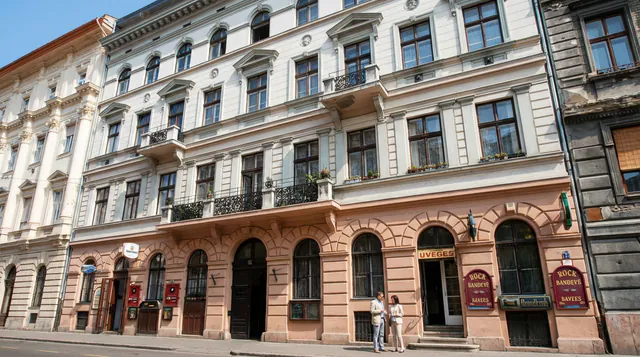
1 min walk (100m)
Direct frontage on Hunyadi Square park and market hall · Historic courtyard building with modern rooftop extension
Price From €85/night
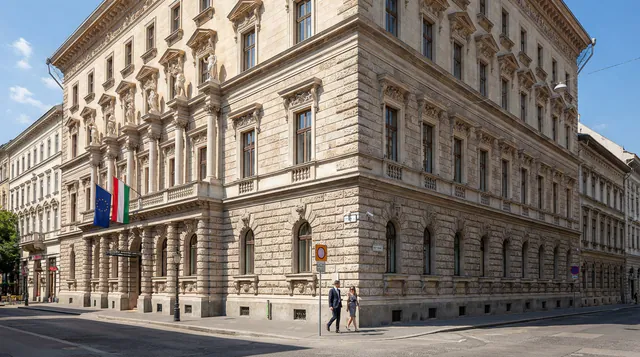
3 min walk (233m)
Housed in the restored Neo-Renaissance Haggenmacher Palace (1886) · Prime location on UNESCO-listed Andrássy Avenue near Oktogon
Price From €145/night
Nearby Restaurants
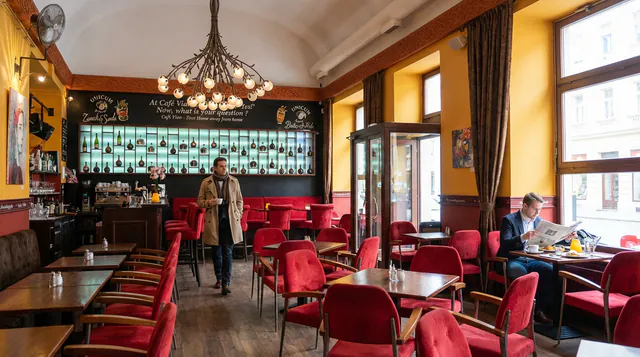
Café Vian Liszt Ferenc tér
International Bistro • Moderate
Sitting on Liszt Ferenc tér, the stretch locals call the Broadway of Budapest, C...
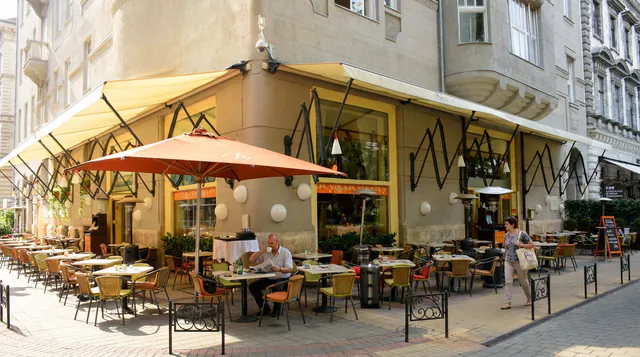
Menza Restaurant and Cafe
Hungarian Casual • Moderate
Walking into Menza feels like a stylized trip back to 1970s Budapest. The name r...
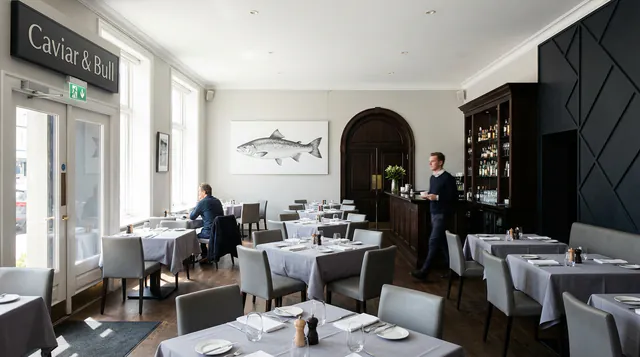
Caviar & Bull Budapest
Fusion Fine Dining • Fine Dining
You'll find Caviar & Bull Budapest tucked inside the Corinthia Hotel on Erzsébet...
Frequently Asked Questions
Can I take photos inside the House of Terror Museum?
How do I get to the House of Terror Museum via public transport?
What is the history behind the House of Terror Museum building?
Are there places to eat near the House of Terror Museum?
Is the House of Terror Museum appropriate for young children?
When is the quietest time to visit the House of Terror Museum?
What other sights are within walking distance of the House of Terror Museum?
What is unique about the House of Terror Museum roof?
What are the opening hours of House of Terror Museum?
How much does it cost to visit House of Terror Museum?
How long should I spend at House of Terror Museum?
Is House of Terror Museum wheelchair accessible?
Quick Facts
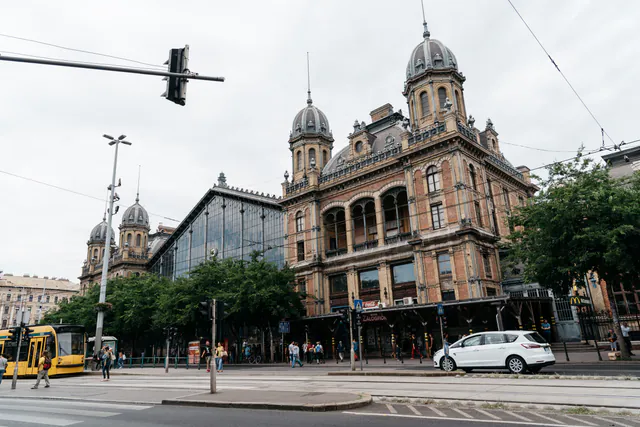
The Neighborhood
District VI: Terézváros
Read Guide