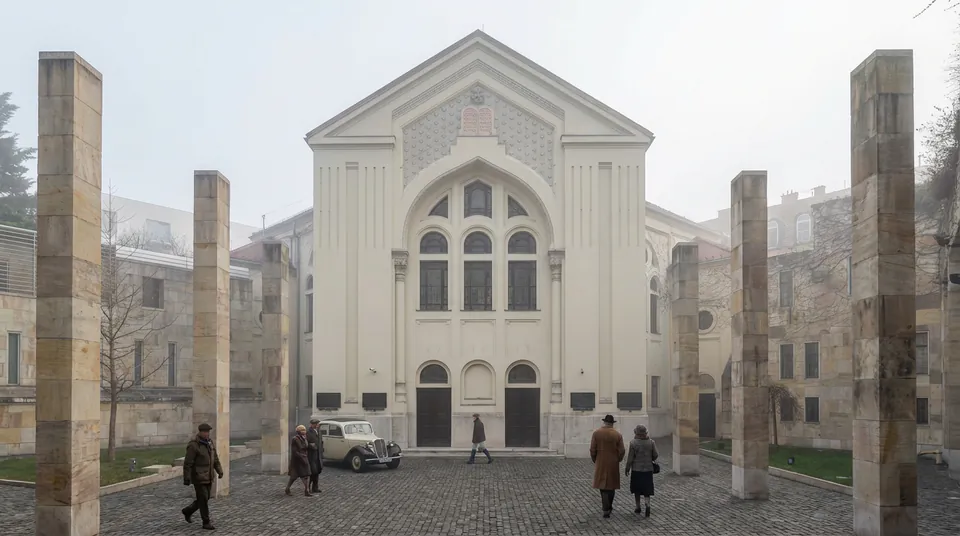
Holokauszt Emlékközpont
Museum
About the Experience
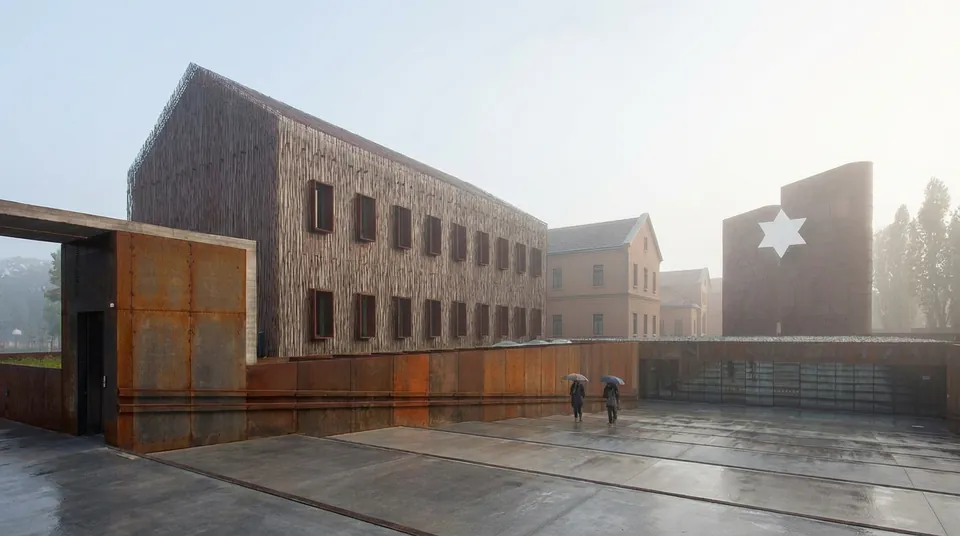
Head to the 9th District's rehabilitation zone to find one of Budapest's most jarring architectural statements. While the Jewish Museum at Dohány Street is the famous one, this state-funded center at Páva utca focuses specifically on the research and history of the Holocaust in Hungary. It's a clash of styles. You have the restored Páva Street Synagogue sitting beside a raw, modern concrete wing built to make you feel off-balance. The experience starts underground. You descend into a series of galleries that mimic the darkening of the 20th century. Through personal letters, family photos, and home movies, the museum tracks the destruction of Hungarian Jewish and Roma lives. It isn't about dry statistics. It's about the people behind them. You'll trace the timeline from the first loss of rights in the 1930s to the 1944 mass deportations. The tour ends by climbing out of the dark galleries into the light of the inner courtyard and the synagogue. It's a quiet, heavy place far from the 7th District crowds. Worth every forint.
History & Significance
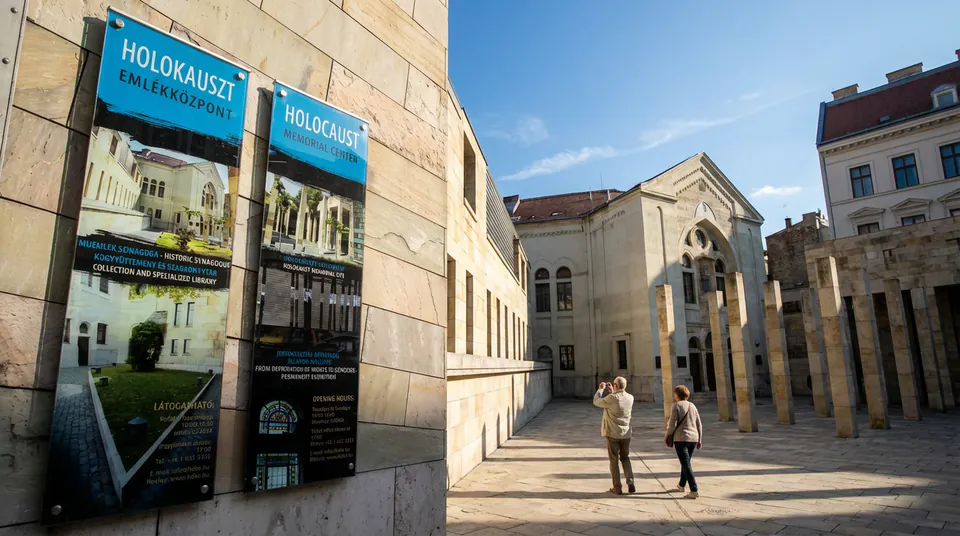
Lipót Baumhorn, the heavyweight champion of Hungarian synagogue design, built the Páva Street Synagogue in 1924. It served the Jewish community in Ferencváros until the world fell apart in 1944. During the final years of the war, the building became a holding pen for people waiting for deportation. After 1945, the synagogue was left to rot. For decades, it was just another neglected building used for offices and storage. Things changed in 1999 when the government set up a foundation to save it. Architects István Mányi and Attila Gáti designed a sharp, modern museum wing to wrap around the original structure. They finished in 2004, opening the doors on the 60th anniversary of the first mass deportations. It remains the first state-founded Holocaust institution in this part of Europe.
The Permanent Exhibition
The main show is titled "From Deprivation of Rights to Genocide." It lives in the basement for a reason. The walls tilt and the corridors feel narrow. The architecture wants to make you feel as unsettled as the history it covers. You'll see newsreels and hear survivor testimonies that make the 1940s feel uncomfortably close. But it's the small things that stick. A child's doll. A suitcase. A handwritten note. These items anchor the timeline as you move from the discriminatory laws of the 1920s to the terror of the Arrow Cross and the trains to Auschwitz. Interactive screens let you dig into the data of specific towns across Hungary. And then, finally, you climb. The darkness of the galleries gives way to the memorial space above.
The Páva Street Synagogue
This is the center's soul. Baumhorn designed it in 1924, and the restoration is a triumph. Look up at the ceiling. The geometric patterns in blue, gold, and white create a space that feels like it's breathing. It's a massive contrast to the busy Dohány Street Synagogue. Here, it's usually just you and the silence. The ark and the bimah are back where they belong. Sometimes the seating area hosts temporary art or concerts, but mostly it's a room for thinking. Below you, the museum shows the attempt to wipe out a culture. Up here, the dome proves it didn't work. The shift from the cramped, dark corridors downstairs to this airy, light-filled hall is the most powerful part of the visit.
Architecture & Memorial Garden
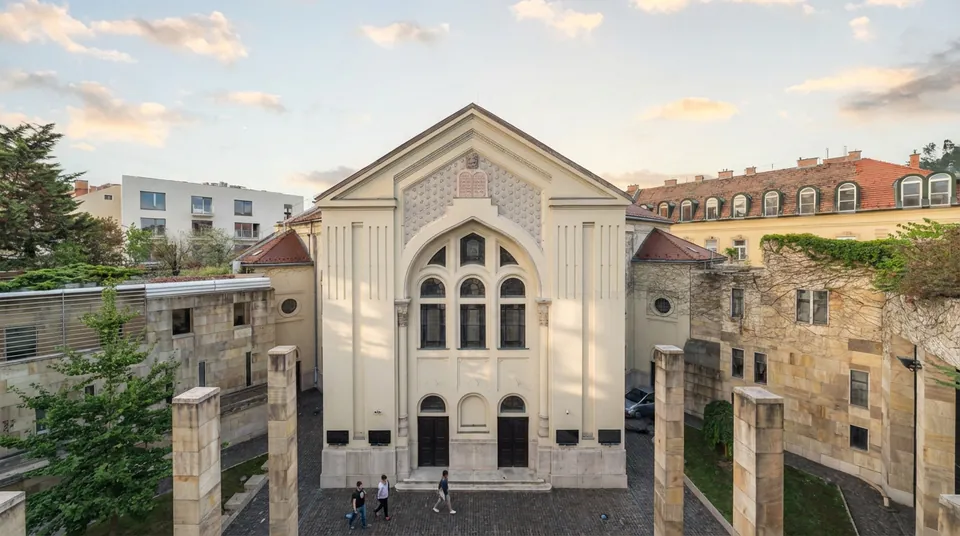
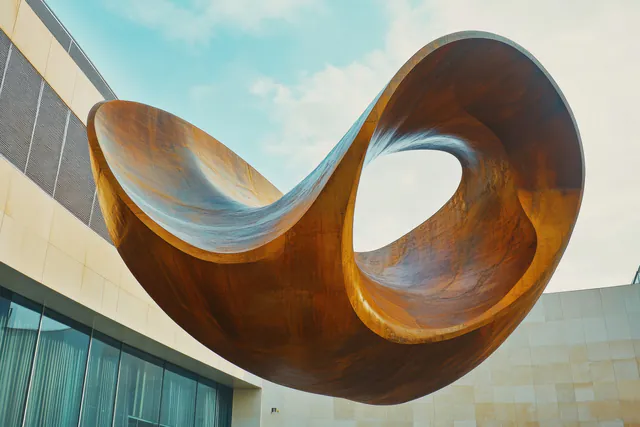
The building is its own monument. István Mányi designed the modern wing to frame the old synagogue without ever touching it. It's a physical gap representing the break in history. The walls are raw concrete. The entrance feels like a descent into another world. In the courtyard, you'll find the Tower of Lost Communities. It's a glass column etched with the names of 1,441 towns where Jewish life was erased. It looks like a ghost. Then there is the Memorial Wall. From a distance, the laser-etched names look like static or gray noise. Get closer. The noise turns into individual names. They're still adding more as researchers find them. It's a living list.
Tours & Experiences Nearby
Top-rated tours and experiences starting near Holokauszt Emlékközpont.
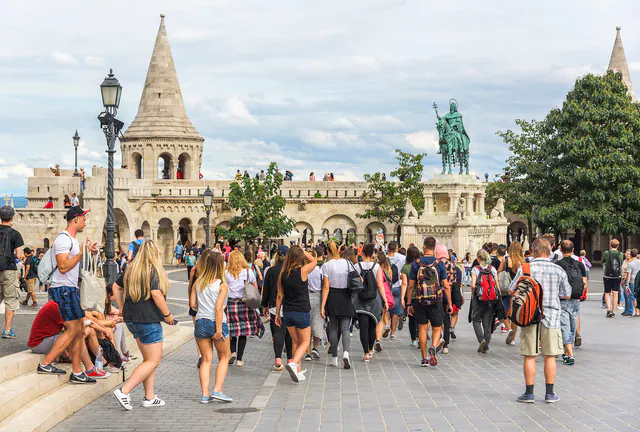 walking tour
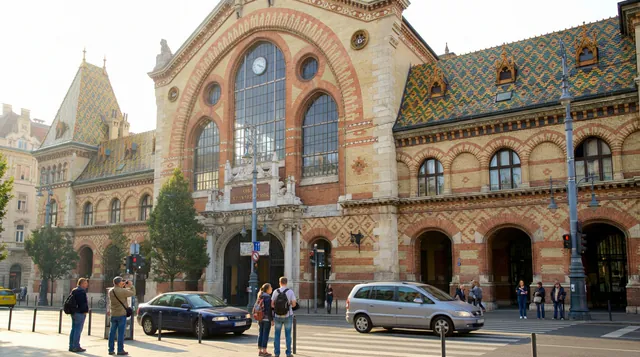 cooking class
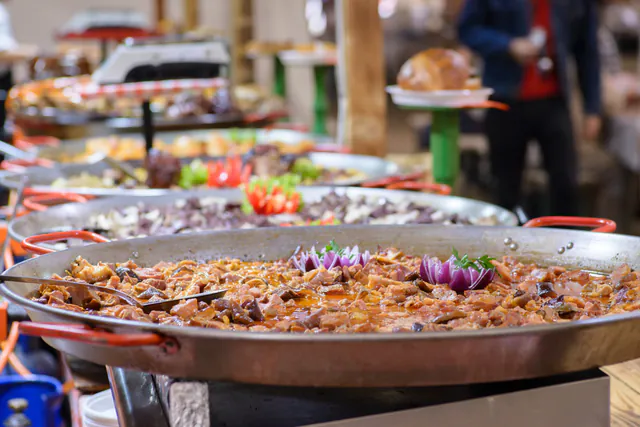 food tour
 wine tasting
Essential Visitor Tips
Check your map. This isn't the Great Synagogue on Dohány utca. You need the 9th District. Take the M3 metro to Corvin-negyed and walk from there.
Think twice before bringing young kids. The archival footage is brutal. The museum suggests a minimum age of 12 for a reason.
Be ready for a security check. It's airport-style with metal detectors and bag scans. Leave your heavy gear in the lockers provided.
Don't miss the Glass Wall. You'll find it in the inner courtyard. It's eight meters high and covered in over 160,000 laser-etched names of victims.
The tour ends in the synagogue. It's still a consecrated space. Cover your shoulders and knees. Keep your voice down.
Best Time to Visit
"Go on a Tuesday or Wednesday morning. You'll want the silence. The weight of the exhibits is easier to process without a crowd."
Nearby Hotels
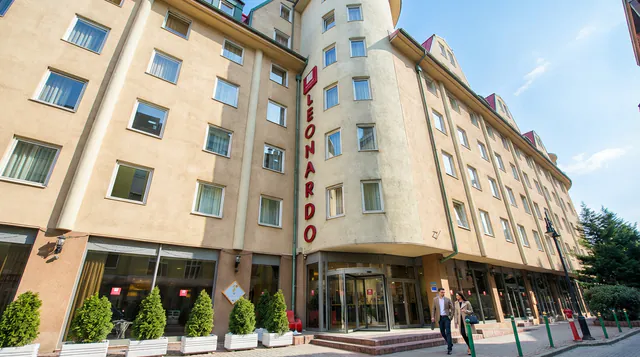
3 min walk (209m)
Located on Tompa Street, a leafy pedestrian-friendly avenue known for local gastronomy · On-site health club with a fully equipped gym and Finnish sauna
Price From €85/night
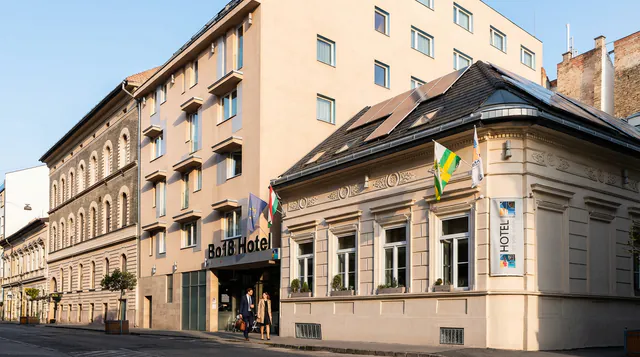
4 min walk (311m)
Generous champagne buffet breakfast included with most rates · Complimentary wellness corner with Finnish sauna and jacuzzi
Price From €95/night
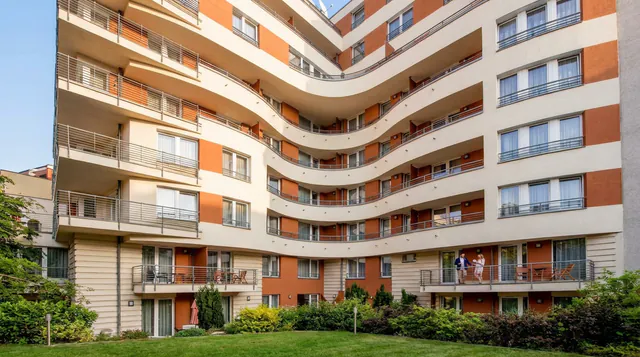
4 min walk (359m)
Spacious serviced apartments ranging from 35m² studios to 100m² penthouses · Private internal garden courtyard providing a quiet urban retreat
Price From €115/night
Nearby Restaurants
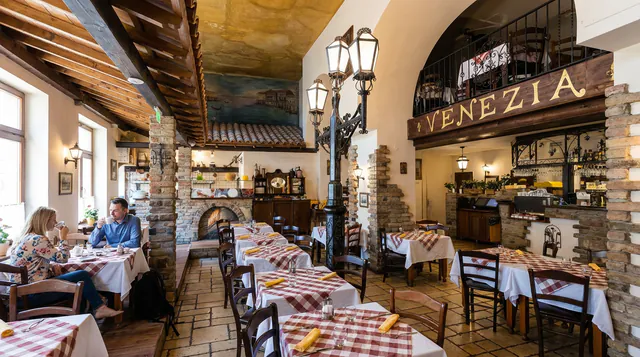
Trattoria Venezia
Italian Casual • Moderate
Sitting on the József körút since 1992, Trattoria Venezia is a District VIII anc...
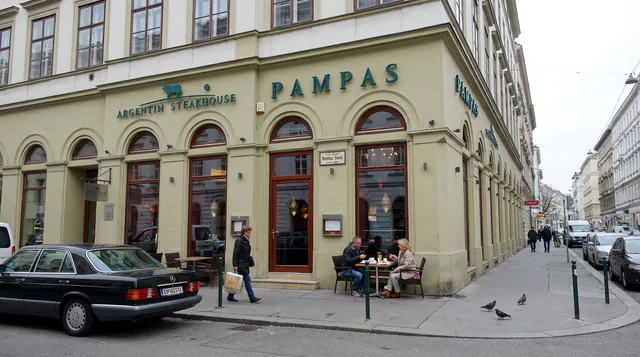
Pampas Argentin Steakhouse
International Fine Dining • Upscale
Pampas Argentin Steakhouse is a serious temple for carnivores sitting right acro...
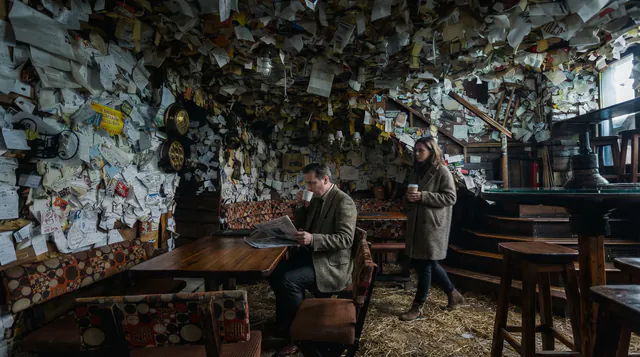
For Sale Pub
Hungarian Ruin Bar • Moderate
Sitting right across from the Great Market Hall, For Sale Pub is easily the most...
Frequently Asked Questions
How do I get to Holokauszt Emlékközpont using public transport?
Is Holokauszt Emlékközpont different from the Jewish Museum at Dohány Street?
When is the best time to visit Holokauszt Emlékközpont to avoid crowds?
Does the Holokauszt Emlékközpont include a visit to the synagogue?
What can I expect from the permanent exhibition at Holokauszt Emlékközpont?
Are there restaurants near Holokauszt Emlékközpont?
Is there a dress code for Holokauszt Emlékközpont?
What makes the architecture of Holokauszt Emlékközpont unique?
What are the opening hours of Holokauszt Emlékközpont?
How much does it cost to visit Holokauszt Emlékközpont?
How long should I spend at Holokauszt Emlékközpont?
Is Holokauszt Emlékközpont wheelchair accessible?
Quick Facts
Find Hotels Nearby
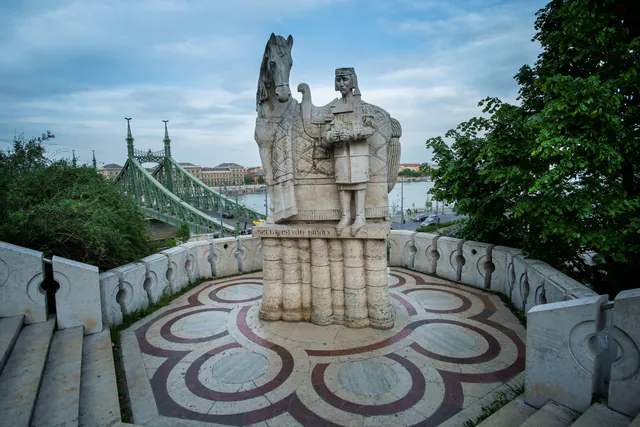
The Neighborhood
District IX: Ferencváros
Read Guide